የ10ኛ ክፍል ኬሚስትሪ ምዕራፍ 3
Why a salt can be acidic, basic or normal
1:26 · በምዕራፍ 3 ላይ ካሉት 2 ማብራሪያዎች 1ኛው
የ10ኛ ክፍል ኬሚስትሪ ምዕራፍ 3 አጭር የ Temari የአኒሜሽን ማብራሪያ፦ Why a salt can be acidic, basic or normal። የሚናገረው ሁሉ ከቪዲዮው በታች ተጽፏል። በነጻ ይታያል፤ መለያ አያስፈልግም። ማብራሪያዎቹ በእንግሊዝኛ ናቸው።
ማብራሪያው የሚናገረው ሁሉ
የማብራሪያው ቃላት በየክፍሉ፣ በቪዲዮው ላይ እንደሚጻፉት።
A salt replaces an acid's hydrogen
Sulphuric acid has two hydrogens it can give up in water.
A salt forms when a metal ion takes the place of those hydrogens.
So what happens if a metal replaces only one of them?
Replace one: an acidic salt
Add potassium hydroxide. The potassium ion takes one hydrogen's place, and that hydrogen joins the hydroxide as water.
This gives potassium hydrogen sulphate, which still has a hydrogen to give away.
In water it releases that hydrogen ion and turns blue litmus red. It is an acidic salt.
Replace both: a normal salt
Add more potassium hydroxide, and the second hydrogen is replaced as well.
Now we have potassium sulphate, with no replaceable hydrogen left.
A salt made by complete replacement is a normal salt.
Keep a hydroxide: a basic salt
Now start from a base. Zinc hydroxide has two hydroxide groups.
Nitric acid's nitrate ion replaces only one of them, and water forms again.
This gives zinc hydroxide nitrate. It still holds one hydroxide, so it is a basic salt.
Acidic, normal and basic salts
A leftover hydrogen makes an acidic salt. A leftover hydroxide makes a basic salt.
Save this one for revision.
የምዕራፍ 3 ሙሉ ትምህርት
በዚህ ምዕራፍ ላይ ያለው ረዘም ያለ የ Temari ቪዲዮ ትምህርት ነው፤ የሚናገረው ሁሉ በገጹ ላይ ተጽፏል።
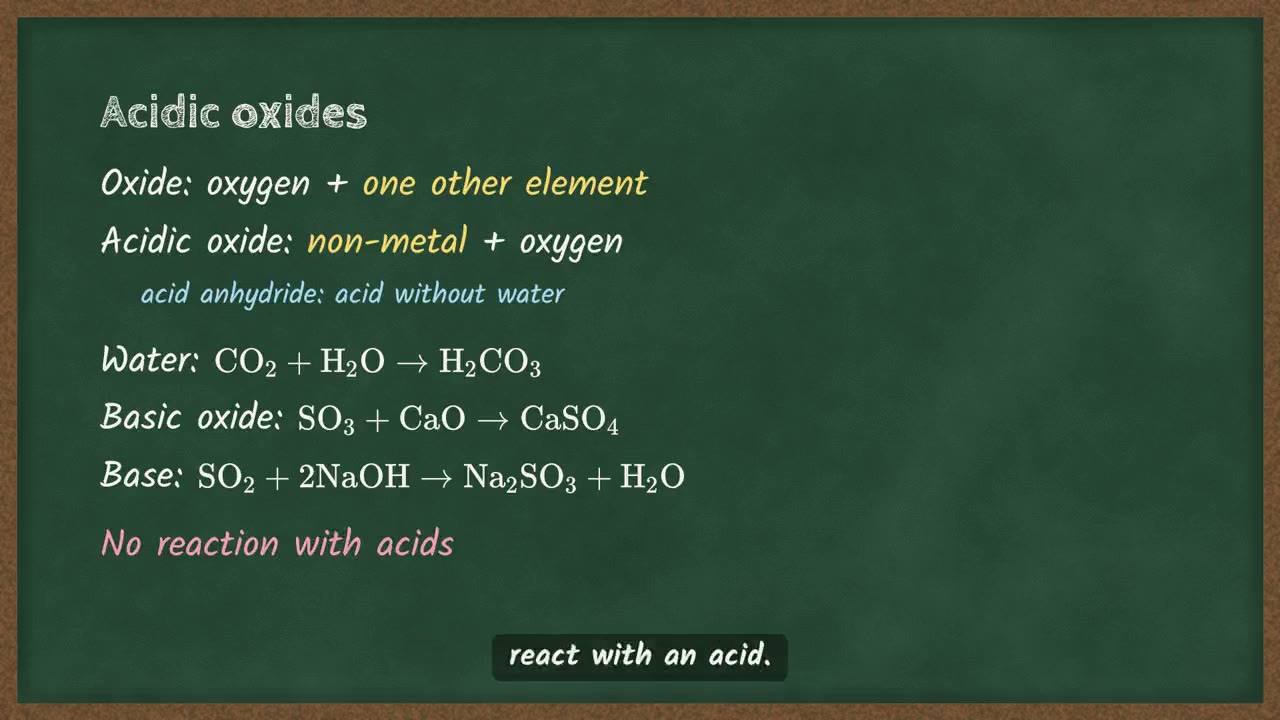 Five kinds of oxide, and how each one reacts4 ደቂቃ
በምዕራፍ 3 ላይ ሌሎች ማብራሪያዎች
ስለ ምዕራፍ 3 ተጨማሪ
የምዕራፉ ገጽ Temari በዚህ ምዕራፍ ላይ ያለውን ሌላውን ይዟል፤ ለምሳሌ አጭር ማስታወሻዎችና የመልመጃ ጥያቄዎች ከመልሶቻቸው ጋር።
የምዕራፍ 3 ገጽ ይክፈቱይህን ምዕራፍ በመተግበሪያው ይለማመዱ
Temari ይህን ምዕራፍ ወደ ጊዜ የተቆረጠለት መልመጃ ይለውጠዋል፣ እየሠሩ ያርምዎታል፤ ያልገባዎትንም የሚያብራራ የ AI አስተማሪ አለ።
በነጻ ይጀምሩ
Temari.et ለ Android ስልኮች መተግበሪያ አለው፤ በ Google Play ላይ በነጻ ይገኛል።

