የ10ኛ ክፍል ጂኦግራፊ ምዕራፍ 7
How waste from the land reaches Africa's coasts
1:21
የ10ኛ ክፍል ጂኦግራፊ ምዕራፍ 7 አጭር የ Temari የአኒሜሽን ማብራሪያ፦ How waste from the land reaches Africa's coasts። የሚናገረው ሁሉ ከቪዲዮው በታች ተጽፏል። በነጻ ይታያል፤ መለያ አያስፈልግም። ማብራሪያዎቹ በእንግሊዝኛ ናቸው።
ማብራሪያው የሚናገረው ሁሉ
የማብራሪያው ቃላት በየክፍሉ፣ በቪዲዮው ላይ እንደሚጻፉት።
Waste far inland still reaches the sea
Picture a town far inland, beside a river.
Its sewage and factory waste are poured into the river.
If that waste is persistent, meaning it does not break down, the river carries it all the way down.
Much of it reaches the estuary, where the river meets the sea.
Mangroves filter the coast
Rain adds run-off from farms and city streets, rich in nitrogen.
At the coast, wetlands and mangroves act as natural filters.
They trap sediment, extra nitrogen and wastes.
Where they are destroyed, nothing holds it back, and nutrients build up faster.
Plastic takes the same road
Plastic takes the same road.
In South Africa, only 16 percent of plastic is recycled.
About 8 million metric tons of the rest ends up in rivers.
Wind, littering, overflowing landfills and poor waste management carry it there, and the rivers carry it to the ocean.
Most of it starts on land
Over 80 percent of marine pollution in South Africa comes from the land.
Near Durban, plastic clogs Cuttings Beach.
Coastal pollution starts on land
Rivers carry waste from far inland to the sea, and mangroves filter it.
Save this one for revision.
የምዕራፍ 7 ሙሉ ትምህርት
በዚህ ምዕራፍ ላይ ያለው ረዘም ያለ የ Temari ቪዲዮ ትምህርት ነው፤ የሚናገረው ሁሉ በገጹ ላይ ተጽፏል።
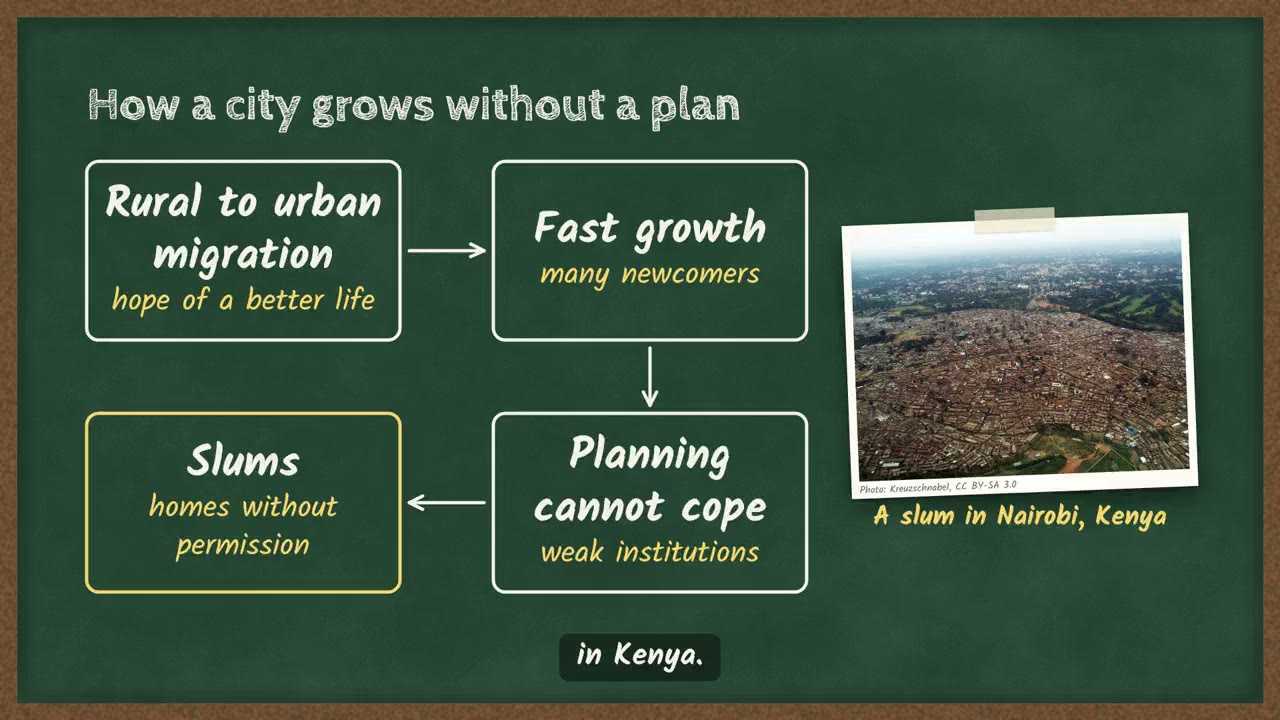 When cities grow without a plan4 ደቂቃ
ስለ ምዕራፍ 7 ተጨማሪ
የምዕራፉ ገጽ Temari በዚህ ምዕራፍ ላይ ያለውን ሌላውን ይዟል፤ ለምሳሌ አጭር ማስታወሻዎችና የመልመጃ ጥያቄዎች ከመልሶቻቸው ጋር።
የምዕራፍ 7 ገጽ ይክፈቱይህን ምዕራፍ በመተግበሪያው ይለማመዱ
Temari ይህን ምዕራፍ ወደ ጊዜ የተቆረጠለት መልመጃ ይለውጠዋል፣ እየሠሩ ያርምዎታል፤ ያልገባዎትንም የሚያብራራ የ AI አስተማሪ አለ።
በነጻ ይጀምሩ
Temari.et ለ Android ስልኮች መተግበሪያ አለው፤ በ Google Play ላይ በነጻ ይገኛል።

