የ11ኛ ክፍል ኢኮኖሚክስ ምዕራፍ 7
How Ethiopia's industry turned to exports
1:22 · በምዕራፍ 7 ላይ ካሉት 2 ማብራሪያዎች 2ኛው
የ11ኛ ክፍል ኢኮኖሚክስ ምዕራፍ 7 አጭር የ Temari የአኒሜሽን ማብራሪያ፦ How Ethiopia's industry turned to exports። የሚናገረው ሁሉ ከቪዲዮው በታች ተጽፏል። በነጻ ይታያል፤ መለያ አያስፈልግም። ማብራሪያዎቹ በእንግሊዝኛ ናቸው።
ማብራሪያው የሚናገረው ሁሉ
የማብራሪያው ቃላት በየክፍሉ፣ በቪዲዮው ላይ እንደሚጻፉት።
The 1950s: factories for the home market
From the mid-1950s, the imperial plan built import-substituting light industries for the home market.
High tariffs and import bans protected them.
Yet industry stayed weak: handicraft workshops and modern factories each made about half of manufacturing value added.
1974 to 1991: the state takes over
From 1974, the Derg nationalized most large factories under state corporations.
Private investment was capped at half a million birr, one venture per person.
And its plan still favoured import substitution.
After 1991: make it for export
In 1998 came a narrow export promotion strategy.
The 2003 Industrial Development Strategy was export-led and labour-intensive, with the private sector as engine.
Its priority sectors: textile and garment, meat, leather, and agro-processing.
Industrial parks on the corridors
Industrial parks build on this, along key economic corridors, linked to ports by road and electric railway.
They have created jobs, raised exports and attracted foreign investment.
Industrial strategy in Ethiopia
Industry moved from the home market, to state control, to exports.
Save this one for revision.
የምዕራፍ 7 ሙሉ ትምህርት
በዚህ ምዕራፍ ላይ ያለው ረዘም ያለ የ Temari ቪዲዮ ትምህርት ነው፤ የሚናገረው ሁሉ በገጹ ላይ ተጽፏል።
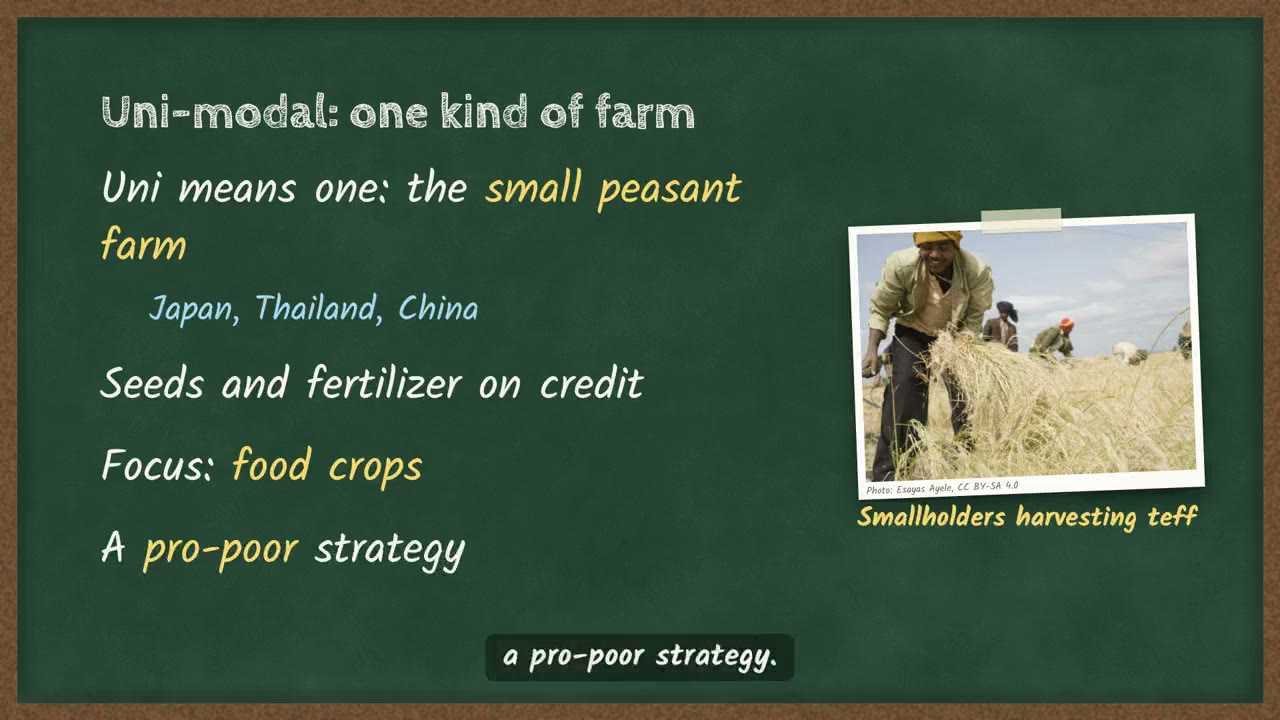 Uni-modal and bi-modal farming strategies4 ደቂቃ
በምዕራፍ 7 ላይ ሌሎች ማብራሪያዎች
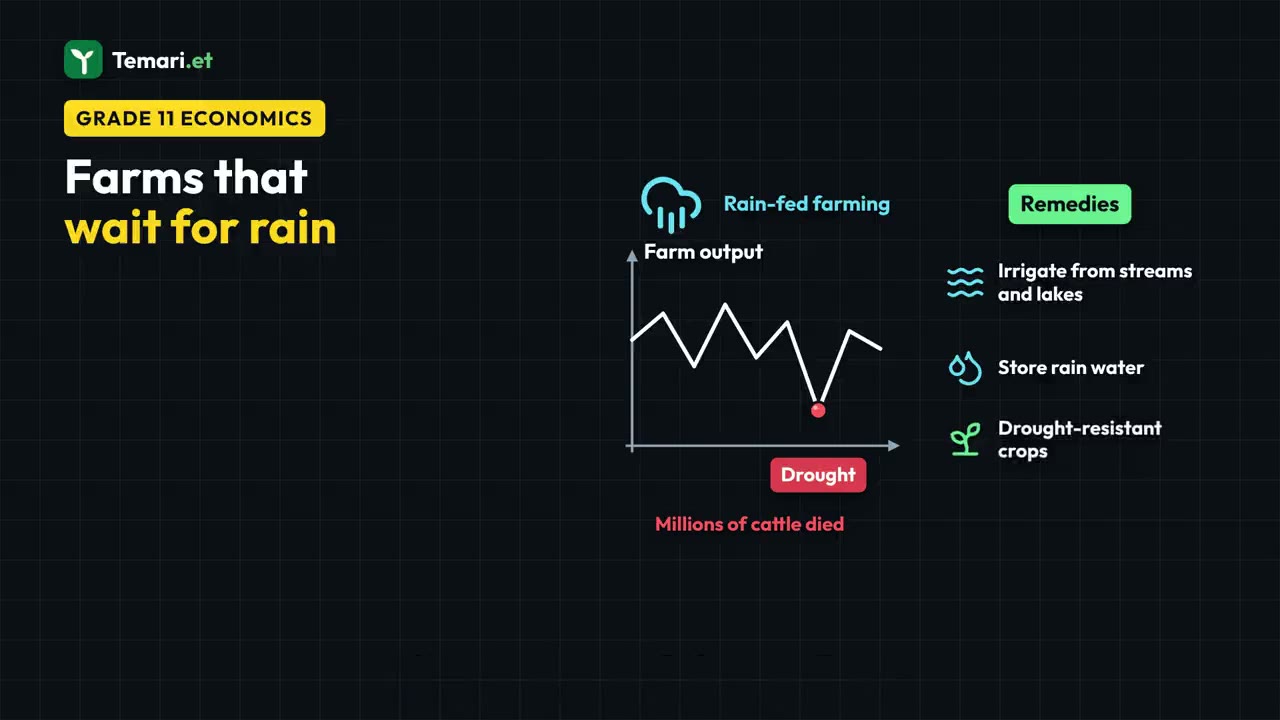
ስለ ምዕራፍ 7 ተጨማሪ
የምዕራፉ ገጽ Temari በዚህ ምዕራፍ ላይ ያለውን ሌላውን ይዟል፤ ለምሳሌ አጭር ማስታወሻዎችና የመልመጃ ጥያቄዎች ከመልሶቻቸው ጋር።
የምዕራፍ 7 ገጽ ይክፈቱይህን ምዕራፍ በመተግበሪያው ይለማመዱ
Temari ይህን ምዕራፍ ወደ ጊዜ የተቆረጠለት መልመጃ ይለውጠዋል፣ እየሠሩ ያርምዎታል፤ ያልገባዎትንም የሚያብራራ የ AI አስተማሪ አለ።
በነጻ ይጀምሩ
Temari.et ለ Android ስልኮች መተግበሪያ አለው፤ በ Google Play ላይ በነጻ ይገኛል።

