የ12ኛ ክፍል ኬሚስትሪ ምዕራፍ 2
Electrolysis of molten sodium chloride
1:23 · በምዕራፍ 2 ላይ ካሉት 3 ማብራሪያዎች 3ኛው
የ12ኛ ክፍል ኬሚስትሪ ምዕራፍ 2 አጭር የ Temari የአኒሜሽን ማብራሪያ፦ Electrolysis of molten sodium chloride። የሚናገረው ሁሉ ከቪዲዮው በታች ተጽፏል። በነጻ ይታያል፤ መለያ አያስፈልግም። ማብራሪያዎቹ በእንግሊዝኛ ናቸው።
ማብራሪያው የሚናገረው ሁሉ
የማብራሪያው ቃላት በየክፍሉ፣ በቪዲዮው ላይ እንደሚጻፉት።
Why must the salt melt?
Solid sodium chloride is made of positive sodium ions and negative chloride ions.
Connect a battery, and no current flows: each ion is locked in place.
Melt it, and the ions can move, so it conducts.
Opposite charges attract
The battery makes one electrode negative, the cathode, and one positive, the anode.
Positive sodium ions drift to the negative cathode.
Negative chloride ions drift to the positive anode.
Sodium ions gain electrons
The battery pushes electrons into the cathode.
Each sodium ion takes one electron and becomes a sodium atom.
Gaining electrons is reduction.
Chloride ions lose electrons
At the anode, two chloride ions each give up one electron.
The two chlorine atoms join as chlorine gas.
Losing electrons is oxidation. The electrons flow back to the battery.
Two kinds of ion, no choice
A pure molten salt has just two kinds of ion: no choice.
Molten calcium chloride gives calcium at the cathode and chlorine at the anode.
Molten salt electrolysis
Metal ions are reduced at the cathode, nonmetal ions oxidized at the anode.
Save this one for your exam.
የምዕራፍ 2 ሙሉ ትምህርት
በዚህ ምዕራፍ ላይ ያለው ረዘም ያለ የ Temari ቪዲዮ ትምህርት ነው፤ የሚናገረው ሁሉ በገጹ ላይ ተጽፏል።
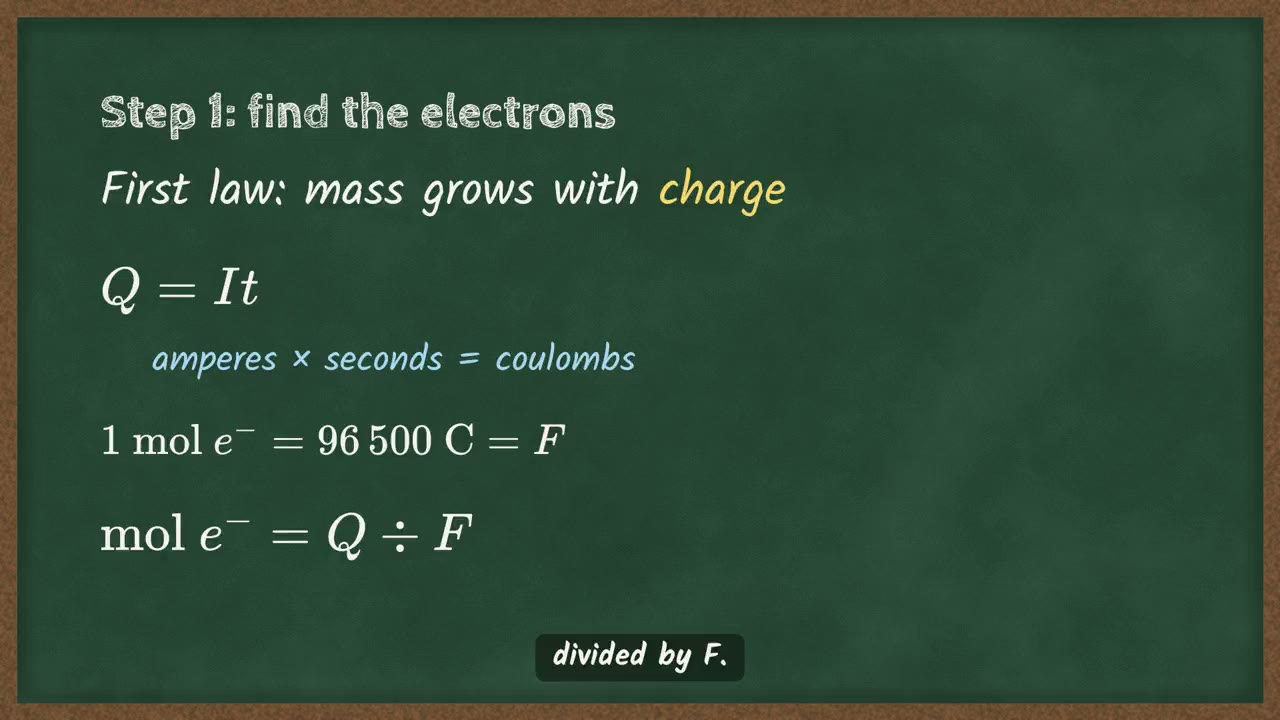 Counting electrons: Faraday's laws of electrolysis4 ደቂቃ
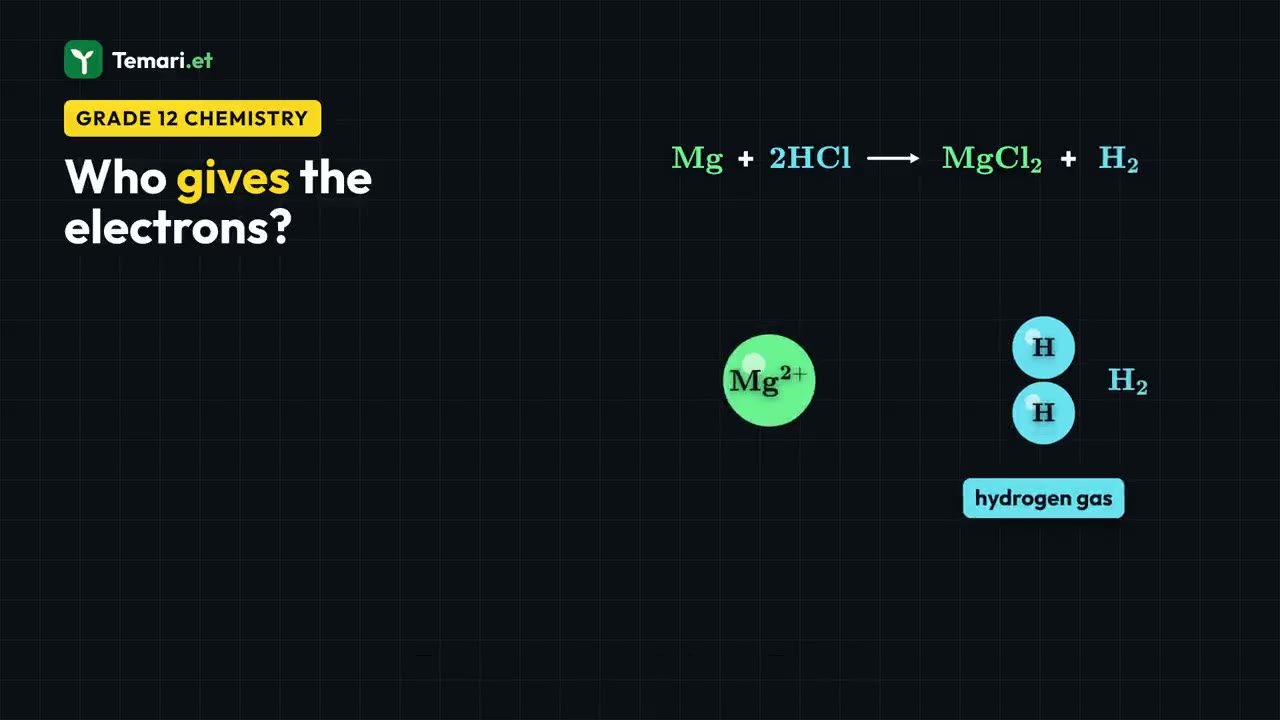
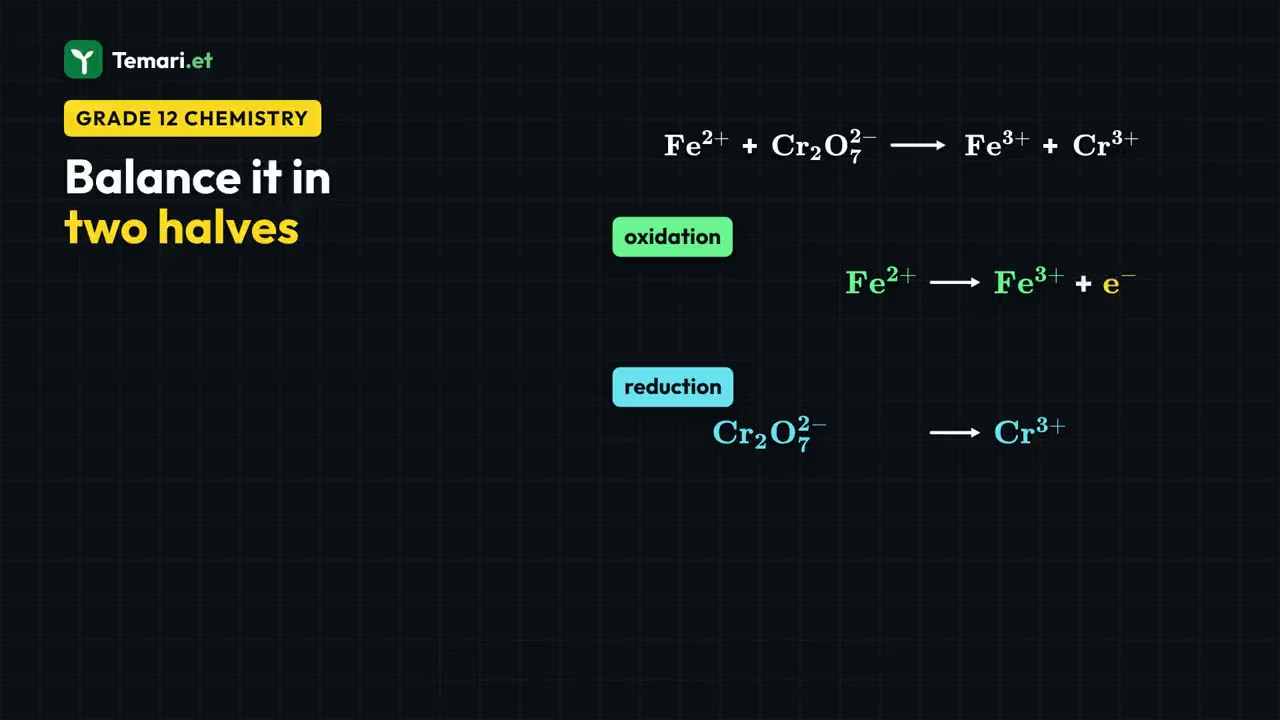
ስለ ምዕራፍ 2 ተጨማሪ
የምዕራፉ ገጽ Temari በዚህ ምዕራፍ ላይ ያለውን ሌላውን ይዟል፤ ለምሳሌ አጭር ማስታወሻዎችና የመልመጃ ጥያቄዎች ከመልሶቻቸው ጋር።
የምዕራፍ 2 ገጽ ይክፈቱይህን ምዕራፍ በመተግበሪያው ይለማመዱ
Temari ይህን ምዕራፍ ወደ ጊዜ የተቆረጠለት መልመጃ ይለውጠዋል፣ እየሠሩ ያርምዎታል፤ ያልገባዎትንም የሚያብራራ የ AI አስተማሪ አለ።
በነጻ ይጀምሩ
Temari.et ለ Android ስልኮች መተግበሪያ አለው፤ በ Google Play ላይ በነጻ ይገኛል።

