Grade 12 Chemistry unit 2
Electrolysis of molten sodium chloride
1:23 · Explainer 3 of 3 on unit 2
A short animated Temari explainer on Grade 12 Chemistry unit 2: Electrolysis of molten sodium chloride. Every word it says is written out under the video.
Everything the explainer says
The explainer's words, part by part, as its captions show them.
Why must the salt melt?
Solid sodium chloride is made of positive sodium ions and negative chloride ions.
Connect a battery, and no current flows: each ion is locked in place.
Melt it, and the ions can move, so it conducts.
Opposite charges attract
The battery makes one electrode negative, the cathode, and one positive, the anode.
Positive sodium ions drift to the negative cathode.
Negative chloride ions drift to the positive anode.
Sodium ions gain electrons
The battery pushes electrons into the cathode.
Each sodium ion takes one electron and becomes a sodium atom.
Gaining electrons is reduction.
Chloride ions lose electrons
At the anode, two chloride ions each give up one electron.
The two chlorine atoms join as chlorine gas.
Losing electrons is oxidation. The electrons flow back to the battery.
Two kinds of ion, no choice
A pure molten salt has just two kinds of ion: no choice.
Molten calcium chloride gives calcium at the cathode and chlorine at the anode.
Molten salt electrolysis
Metal ions are reduced at the cathode, nonmetal ions oxidized at the anode.
Save this one for your exam.
The full lesson on unit 2
Temari's longer video lesson on this chapter, with every word written out on its page.
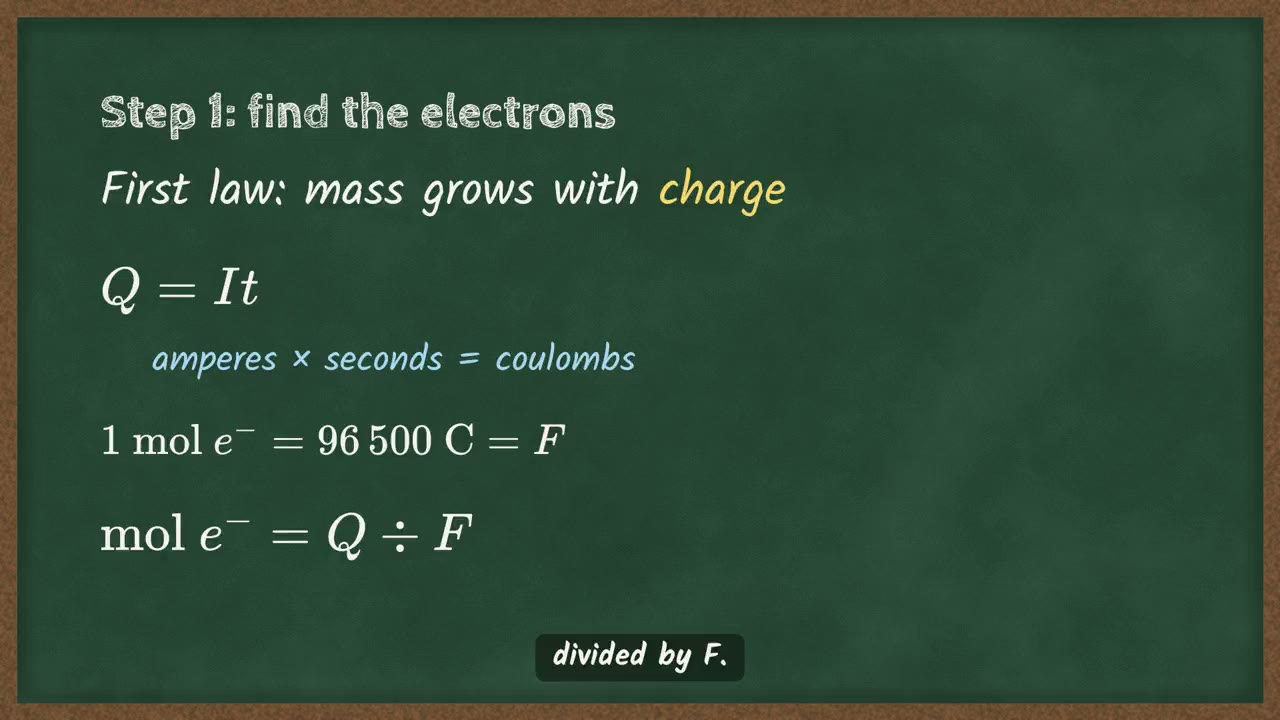 Counting electrons: Faraday's laws of electrolysis4 min
More explainers on unit 2
More on unit 2
The chapter's own page holds the rest of what Temari has on it, such as short notes and practice questions with their answers.
Open the unit 2 pagePractise this unit in the app
Temari turns this chapter into timed practice and marks it as you go, with an AI tutor to explain anything that did not land.
Start free
Temari.et is also an Android app, free on Google Play.

