Boqonnaa 2 Diinagdee kutaa 11
Why a monopoly stops at the third haircut
1:22
Ibsa animeeshinii Temari gabaabaa boqonnaa 2 Diinagdee kutaa 11: Why a monopoly stops at the third haircut. Bilisaan ilaalama; herregni hin barbaachisu. Ibsonni kun Afaan Ingiliziitiin.
Wanta ibsichi jedhu hunda
Jechoota ibsichaa kutaa kutaan, akkuma barreeffama viidiyoo irratti mul'atan.
One seller sets the price
A monopoly is the only seller, so it chooses its own price.
To sell more haircuts, it must charge less: 18 for one, down to 10 each for five.
Each extra haircut adds less
Total revenue is price times haircuts.
Marginal revenue, what each extra haircut adds, falls from 18 to 2.
It falls twice as fast as the price.
Each extra haircut costs more
Marginal cost, the extra cost of each haircut, rises from 5 to 15.
Stop at three
The third haircut adds 10 to revenue but only 7 to cost, so it raises profit.
The fourth adds 6 but costs 10, so it lowers profit.
So it stops at three. This is the MR = MC rule.
Price 14, profit 12
At three haircuts, the demand curve sets the price at 14.
Revenue is 3 × 14 = 42, cost is 30, so profit is 12, its highest.
Monopoly output and price
A monopoly sells while marginal revenue beats marginal cost, and reads its price off the demand curve.
Save this one for revision.
Barnoota guutuu boqonnaa 2
Barnoota viidiyoo Temari dheeraa boqonnaa kanaa; wanti inni jedhu hundi fuula isaa irratti barreeffameera.
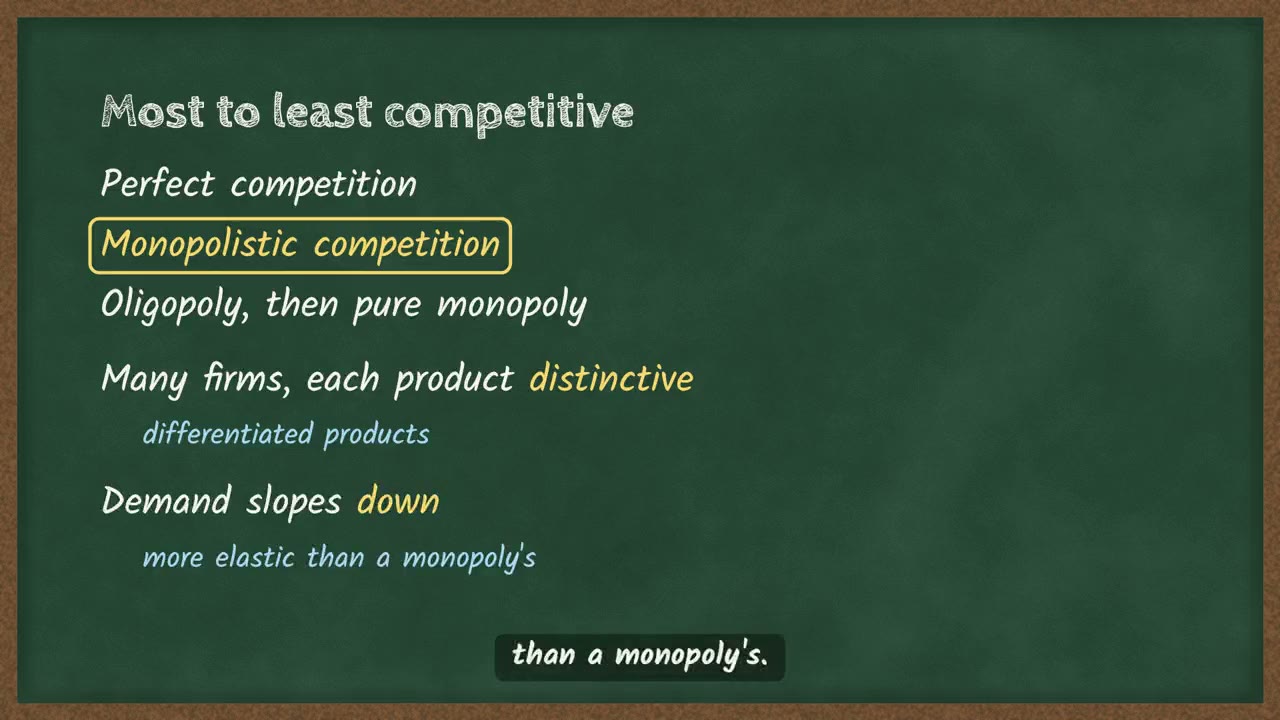 Product differentiation and the product groupdaqiiqaa 4
Dabalata boqonnaa 2
Fuulli boqonnaa kanaa wanta Temari boqonnaa kana irratti qabu kan hafe qaba, fakkeenyaaf yaadannoo gabaabaa fi gaaffii shaakalaa deebii isaanii waliin.
Fuula boqonnaa 2 baniBoqonnaa kana appii keessatti shaakali
Temari boqonnaa kana gara shaakala yeroon daangeffametti jijjiira; utuu hojjettuu ni sirreessa; wanti si hin galinis barsiisaa AI tiin ni ibsama.
Bilisaan jalqabi
Temari.et appii Android qaba; Google Play irratti bilisaan argama.

