የ12ኛ ክፍል ሒሳብ ምዕራፍ 3
How a long tail pulls the mean away from the mode
1:28 · በምዕራፍ 3 ላይ ካሉት 2 ማብራሪያዎች 2ኛው
የ12ኛ ክፍል ሒሳብ ምዕራፍ 3 አጭር የ Temari የአኒሜሽን ማብራሪያ፦ How a long tail pulls the mean away from the mode። የሚናገረው ሁሉ ከቪዲዮው በታች ተጽፏል። በነጻ ይታያል፤ መለያ አያስፈልግም። ማብራሪያዎቹ በእንግሊዝኛ ናቸው።
ማብራሪያው የሚናገረው ሁሉ
የማብራሪያው ቃላት በየክፍሉ፣ በቪዲዮው ላይ እንደሚጻፉት።
Where do the mean, median and mode sit?
This curve shows how often each value turns up. It is symmetrical, the same on both sides.
The mode, the most common value, is at the peak. The median splits the data in half. The mean is the average. Here, all three sit together.
A long tail pulls the mean
Now give the data a long tail to the right: a few very large values.
The mode stays at the peak. The median moves a little. The mean, which uses every value, is pulled furthest.
Mean > median > mode means positive skew: skewed to the right.
Tail to the left, the order flips
Turn the tail to the left, toward small values, and the order flips.
Mean < median < mode means negative skew: skewed to the left.
Skewness as a number
Pearson's coefficient puts a number on it: 3 times mean minus median, over the standard deviation.
Your textbook's example has mean 108, median 110 and standard deviation 5.7.
That gives about −1.05. Negative, so skewed to the left.
Pearson's coefficient of skewness
When a long tail pulls the mean past the median, the data is skewed toward that tail.
Save this one for your exam.
የምዕራፍ 3 ሙሉ ትምህርት
በዚህ ምዕራፍ ላይ ያለው ረዘም ያለ የ Temari ቪዲዮ ትምህርት ነው፤ የሚናገረው ሁሉ በገጹ ላይ ተጽፏል።
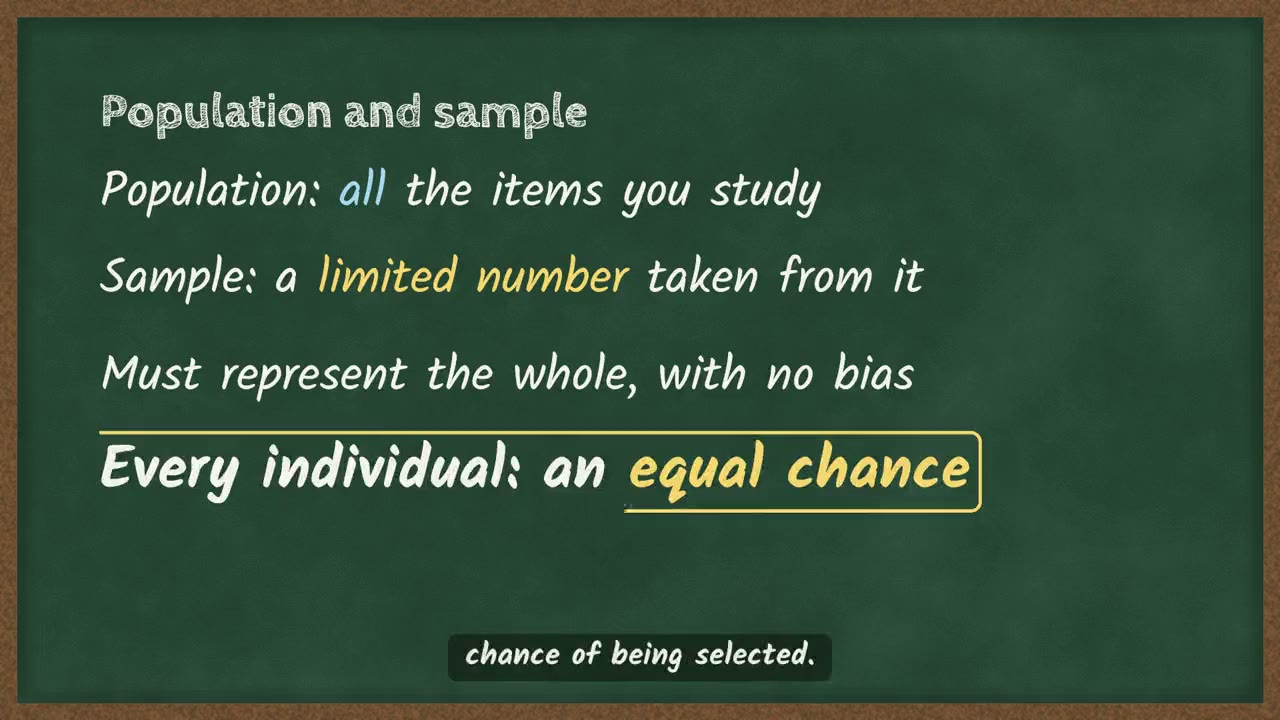 Four ways to choose a random sample4 ደቂቃ
በምዕራፍ 3 ላይ ሌሎች ማብራሪያዎች
ስለ ምዕራፍ 3 ተጨማሪ
የምዕራፉ ገጽ Temari በዚህ ምዕራፍ ላይ ያለውን ሌላውን ይዟል፤ ለምሳሌ አጭር ማስታወሻዎችና የመልመጃ ጥያቄዎች ከመልሶቻቸው ጋር።
የምዕራፍ 3 ገጽ ይክፈቱይህን ምዕራፍ በመተግበሪያው ይለማመዱ
Temari ይህን ምዕራፍ ወደ ጊዜ የተቆረጠለት መልመጃ ይለውጠዋል፣ እየሠሩ ያርምዎታል፤ ያልገባዎትንም የሚያብራራ የ AI አስተማሪ አለ።
በነጻ ይጀምሩ
Temari.et ለ Android ስልኮች መተግበሪያ አለው፤ በ Google Play ላይ በነጻ ይገኛል።

