የ9ኛ ክፍል ኬሚስትሪ ምዕራፍ 5
How a moving electron makes an ionic bond
1:29 · በምዕራፍ 5 ላይ ካሉት 2 ማብራሪያዎች 1ኛው
የ9ኛ ክፍል ኬሚስትሪ ምዕራፍ 5 አጭር የ Temari የአኒሜሽን ማብራሪያ፦ How a moving electron makes an ionic bond። የሚናገረው ሁሉ ከቪዲዮው በታች ተጽፏል። በነጻ ይታያል፤ መለያ አያስፈልግም። ማብራሪያዎቹ በእንግሊዝኛ ናቸው።
ማብራሪያው የሚናገረው ሁሉ
የማብራሪያው ቃላት በየክፍሉ፣ በቪዲዮው ላይ እንደሚጻፉት።
Why sodium gives an electron
Sodium has eleven electrons: two, eight and one.
Chlorine has seventeen: two, eight and seven.
An atom is most stable with eight in its outer shell, like a noble gas.
Losing one electron is far easier than gaining seven.
One electron moves across
So sodium's outer electron moves across to chlorine.
Sodium is left with two and eight, like neon.
Chlorine now has two, eight and eight, like argon.
Count the charges
Sodium has eleven protons and ten electrons: one plus.
Chlorine has seventeen protons and eighteen electrons: one minus.
Atoms with a charge are called ions.
Opposite charges attract
Opposite charges attract.
That electrostatic pull is the ionic bond, and it makes sodium chloride.
Two electrons, two charges
Magnesium has two outer electrons, and oxygen six.
Both go to oxygen, making eight.
Magnesium becomes two plus, oxygen two minus: magnesium oxide.
How an ionic bond forms
The metal gives electrons, the non-metal takes them, and the ions attract.
Save this one for revision.
የምዕራፍ 5 ሙሉ ትምህርት
በዚህ ምዕራፍ ላይ ያለው ረዘም ያለ የ Temari ቪዲዮ ትምህርት ነው፤ የሚናገረው ሁሉ በገጹ ላይ ተጽፏል።
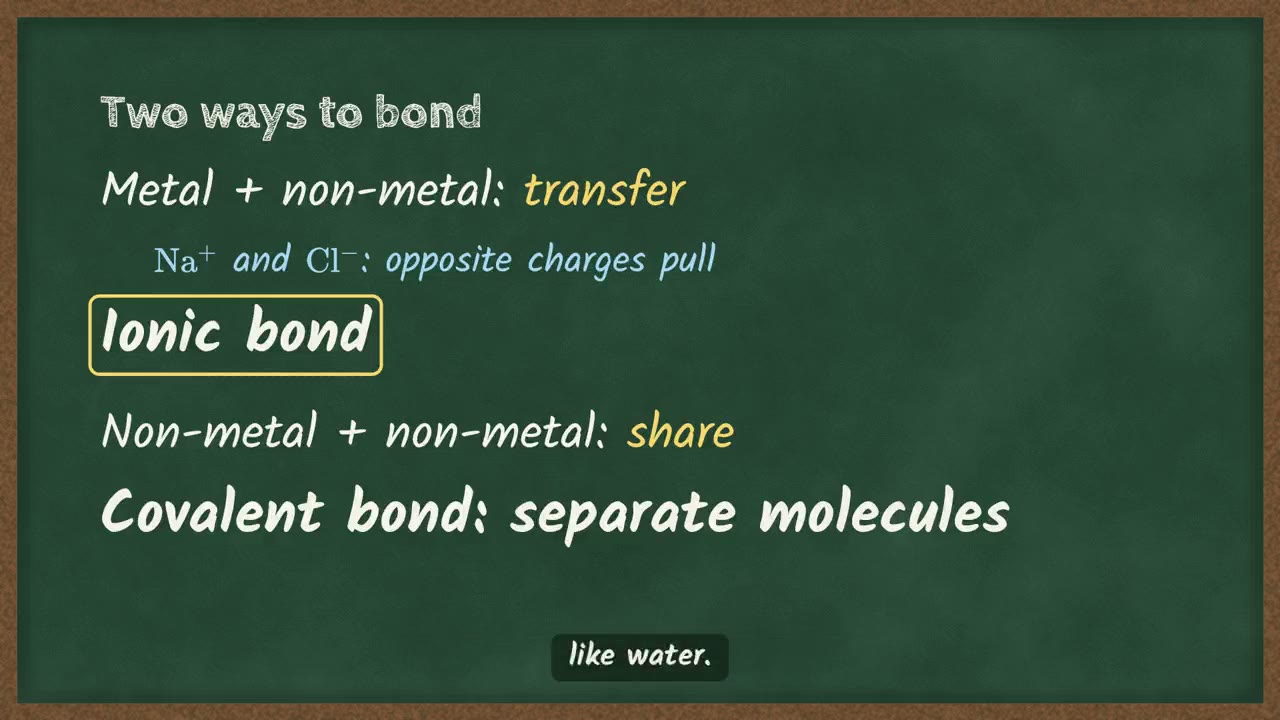 Ionic or covalent: how the bond decides the properties4 ደቂቃ
በምዕራፍ 5 ላይ ሌሎች ማብራሪያዎች
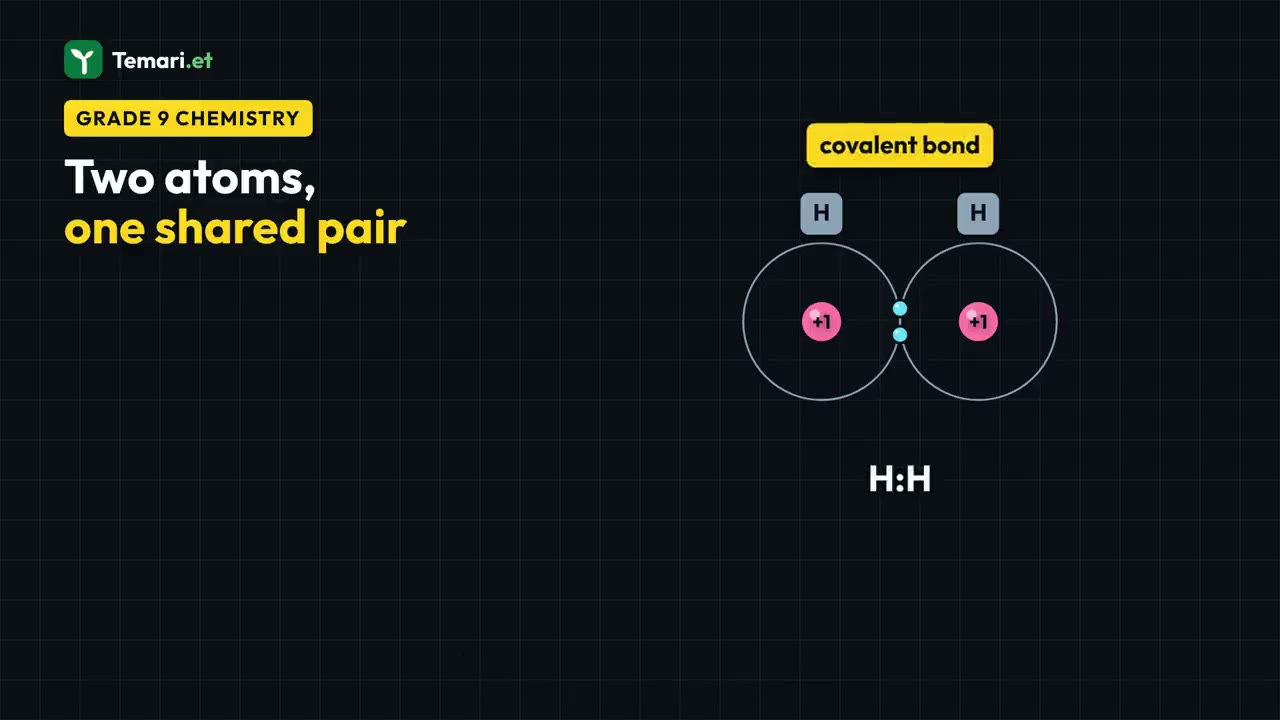
ስለ ምዕራፍ 5 ተጨማሪ
የምዕራፉ ገጽ Temari በዚህ ምዕራፍ ላይ ያለውን ሌላውን ይዟል፤ ለምሳሌ አጭር ማስታወሻዎችና የመልመጃ ጥያቄዎች ከመልሶቻቸው ጋር።
የምዕራፍ 5 ገጽ ይክፈቱይህን ምዕራፍ በመተግበሪያው ይለማመዱ
Temari ይህን ምዕራፍ ወደ ጊዜ የተቆረጠለት መልመጃ ይለውጠዋል፣ እየሠሩ ያርምዎታል፤ ያልገባዎትንም የሚያብራራ የ AI አስተማሪ አለ።
በነጻ ይጀምሩ
Temari.et ለ Android ስልኮች መተግበሪያ አለው፤ በ Google Play ላይ በነጻ ይገኛል።

