የ9ኛ ክፍል ዜግነትና ሥነ ምግባር ምዕራፍ 3
Which way does power flow?
1:16 · በምዕራፍ 3 ላይ ካሉት 3 ማብራሪያዎች 1ኛው
የ9ኛ ክፍል ዜግነትና ሥነ ምግባር ምዕራፍ 3 አጭር የ Temari የአኒሜሽን ማብራሪያ፦ Which way does power flow?። የሚናገረው ሁሉ ከቪዲዮው በታች ተጽፏል። በነጻ ይታያል፤ መለያ አያስፈልግም። ማብራሪያዎቹ በእንግሊዝኛ ናቸው።
ማብራሪያው የሚናገረው ሁሉ
የማብራሪያው ቃላት በየክፍሉ፣ በቪዲዮው ላይ እንደሚጻፉት።
Power once flowed down
Before 1931, Ethiopia had no written constitution, and emperors ruled by tradition.
Old documents said the monarchs got their power from God, so they answered to no earthly power.
The people were only subjects, with no say in their government's decisions.
Now power flows up
The 1995 constitution turns the arrow around.
Its Article 8 is popular sovereignty: the people are the ultimate source of power.
So the government must rest on the consent of the people.
And a constitution limits the government: it may act only within the powers and functions the constitution gives it.
And power answers back
Then the loop closes, through transparency and accountability.
Transparency means officials' conduct and actions are open to the public.
Accountability means officials are held responsible for any failure in their duties.
And under the rule of law, the law applies to everyone, even those in power.
Popular sovereignty
Power comes from the people, stays inside the constitution's limits, and answers to the people.
Save this one for revision.
የምዕራፍ 3 ሙሉ ትምህርት
በዚህ ምዕራፍ ላይ ያለው ረዘም ያለ የ Temari ቪዲዮ ትምህርት ነው፤ የሚናገረው ሁሉ በገጹ ላይ ተጽፏል።
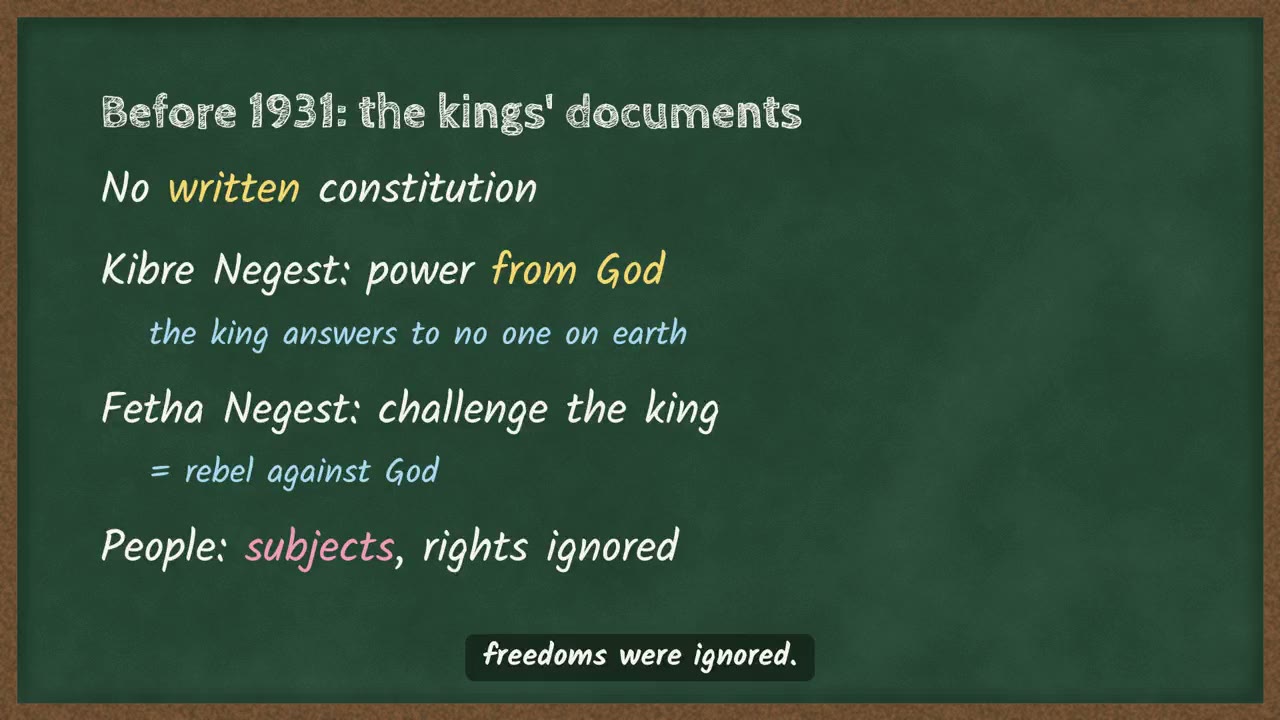 Ethiopia's constitutions, from 1931 to 19955 ደቂቃ
በምዕራፍ 3 ላይ ሌሎች ማብራሪያዎች
ስለ ምዕራፍ 3 ተጨማሪ
የምዕራፉ ገጽ Temari በዚህ ምዕራፍ ላይ ያለውን ሌላውን ይዟል፤ ለምሳሌ አጭር ማስታወሻዎችና የመልመጃ ጥያቄዎች ከመልሶቻቸው ጋር።
የምዕራፍ 3 ገጽ ይክፈቱይህን ምዕራፍ በመተግበሪያው ይለማመዱ
Temari ይህን ምዕራፍ ወደ ጊዜ የተቆረጠለት መልመጃ ይለውጠዋል፣ እየሠሩ ያርምዎታል፤ ያልገባዎትንም የሚያብራራ የ AI አስተማሪ አለ።
በነጻ ይጀምሩ
Temari.et ለ Android ስልኮች መተግበሪያ አለው፤ በ Google Play ላይ በነጻ ይገኛል።

