Boqonnaa 7 Fiizikii kutaa 11
Why an oxygen nucleus weighs less than its parts
1:16 · Ibsa 2 boqonnaa 7 keessaa 2ffaa
Ibsa animeeshinii Temari gabaabaa boqonnaa 7 Fiizikii kutaa 11: Why an oxygen nucleus weighs less than its parts. Bilisaan ilaalama; herregni hin barbaachisu. Ibsonni kun Afaan Ingiliziitiin.
Wanta ibsichi jedhu hunda
Jechoota ibsichaa kutaa kutaan, akkuma barreeffama viidiyoo irratti mul'atan.
Weigh the parts of a nucleus
An oxygen-16 nucleus has eight protons and eight neutrons.
Each has a mass just over one unit.
Weigh them one by one: 16.1276 u in all.
The nucleus is lighter
Now weigh the whole nucleus: 16 u.
So the nucleus is lighter than its parts.
The missing mass is called the mass defect.
Where did the mass go?
The difference is 0.1276 u.
Where did it go?
It was given out as energy when the nucleus formed.
That energy, the binding energy, holds the nucleons together.
Turn the mass into energy
Each atomic mass unit is worth 931.1 MeV.
So the binding energy is about 118.8 MeV.
Divide by sixteen nucleons: about 7.4 MeV each.
That is called the binding energy per nucleon.
Mass defect and binding energy
A nucleus always weighs less than its parts.
Save this one for revision.
Barnoota guutuu boqonnaa 7
Barnoota viidiyoo Temari dheeraa boqonnaa kanaa; wanti inni jedhu hundi fuula isaa irratti barreeffameera.
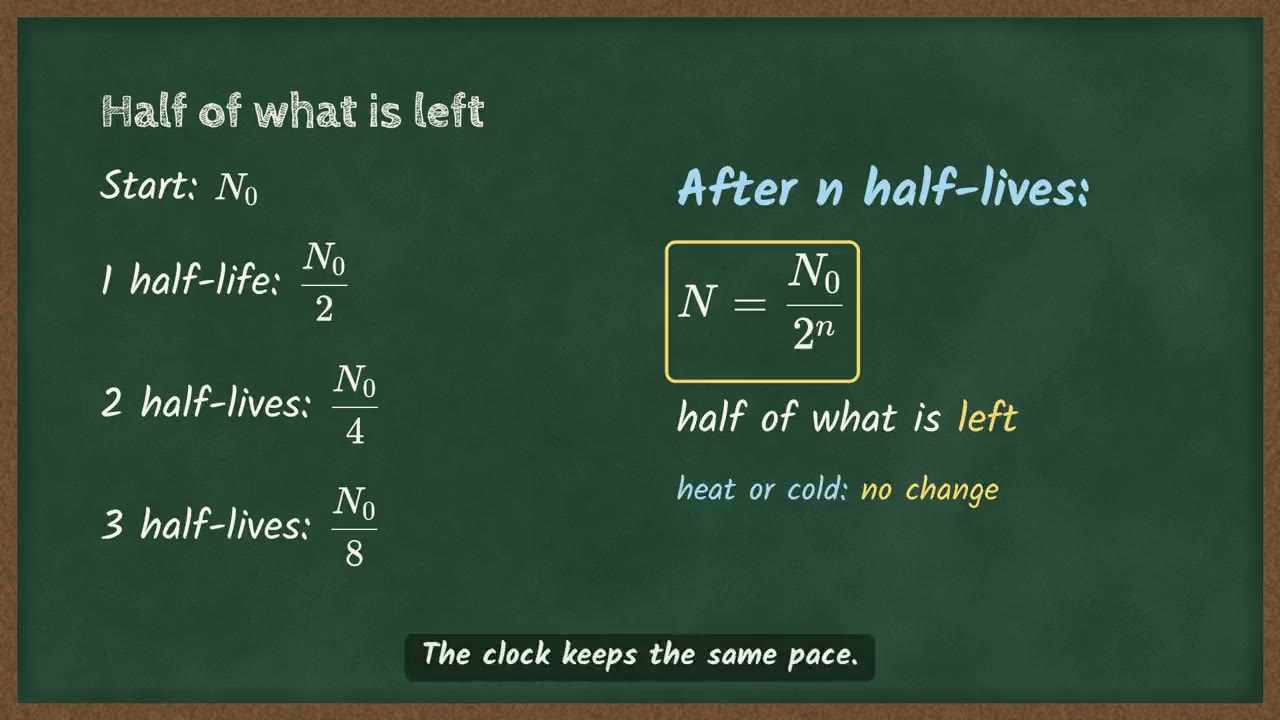 Half-life: the clock inside the nucleusdaqiiqaa 4
Ibsa biroo boqonnaa 7
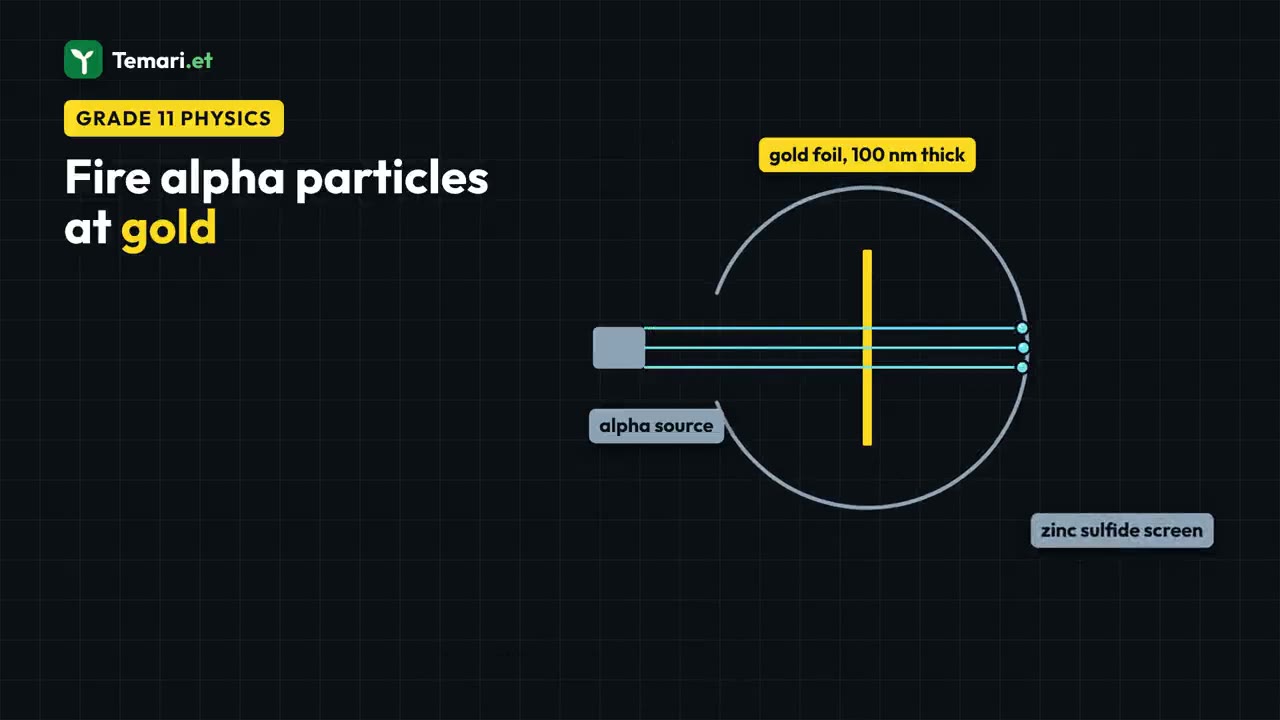
Dabalata boqonnaa 7
Fuulli boqonnaa kanaa wanta Temari boqonnaa kana irratti qabu kan hafe qaba, fakkeenyaaf yaadannoo gabaabaa fi gaaffii shaakalaa deebii isaanii waliin.
Fuula boqonnaa 7 baniBoqonnaa kana appii keessatti shaakali
Temari boqonnaa kana gara shaakala yeroon daangeffametti jijjiira; utuu hojjettuu ni sirreessa; wanti si hin galinis barsiisaa AI tiin ni ibsama.
Bilisaan jalqabi
Temari.et appii Android qaba; Google Play irratti bilisaan argama.

