የ11ኛ ክፍል ኬሚስትሪ ምዕራፍ 2
How the Born-Haber cycle finds the lattice energy of salt
1:28 · በምዕራፍ 2 ላይ ካሉት 3 ማብራሪያዎች 2ኛው
የ11ኛ ክፍል ኬሚስትሪ ምዕራፍ 2 አጭር የ Temari የአኒሜሽን ማብራሪያ፦ How the Born-Haber cycle finds the lattice energy of salt። የሚናገረው ሁሉ ከቪዲዮው በታች ተጽፏል። በነጻ ይታያል፤ መለያ አያስፈልግም። ማብራሪያዎቹ በእንግሊዝኛ ናቸው።
ማብራሪያው የሚናገረው ሁሉ
የማብራሪያው ቃላት በየክፍሉ፣ በቪዲዮው ላይ እንደሚጻፉት።
Salt made in one step
Sodium and chlorine react in one step to make sodium chloride, giving out 411 kJ per mole.
Its lattice energy is the energy change as gas ions pack into the solid.
That is hard to measure, so we go the long way round.
The long way climbs first
First, solid sodium turns into a gas, taking in 108 kJ.
Chlorine molecules split into atoms: half of 240, so 120.
Each sodium atom loses an electron: 496 more.
Then energy comes out
Each chlorine atom takes that electron and gives out 349.
Now the ions are made, 375 kJ above where we started.
The last drop, into solid salt, is the lattice energy.
Both routes match
Both routes start and end in the same place, so by Hess's law their totals are equal.
So the lattice energy is −411 − 375, which is −786 kJ/mol.
Ionic solids exist only because this drop is so big.
Born-Haber cycle for NaCl
Climb to the ions, and the lattice energy is the drop that brings you down to the salt.
Save this one for revision.
የምዕራፍ 2 ሙሉ ትምህርት
በዚህ ምዕራፍ ላይ ያለው ረዘም ያለ የ Temari ቪዲዮ ትምህርት ነው፤ የሚናገረው ሁሉ በገጹ ላይ ተጽፏል።
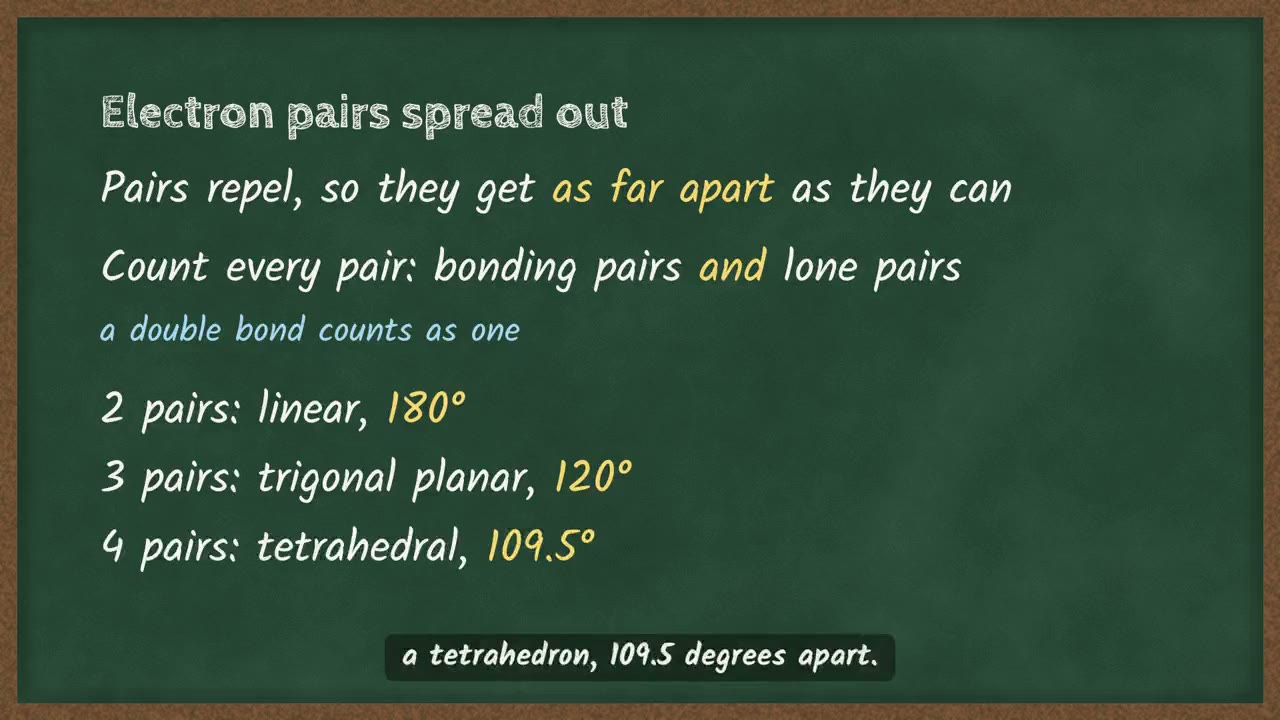 How lone pairs bend a molecule4 ደቂቃ
ስለ ምዕራፍ 2 ተጨማሪ
የምዕራፉ ገጽ Temari በዚህ ምዕራፍ ላይ ያለውን ሌላውን ይዟል፤ ለምሳሌ አጭር ማስታወሻዎችና የመልመጃ ጥያቄዎች ከመልሶቻቸው ጋር።
የምዕራፍ 2 ገጽ ይክፈቱይህን ምዕራፍ በመተግበሪያው ይለማመዱ
Temari ይህን ምዕራፍ ወደ ጊዜ የተቆረጠለት መልመጃ ይለውጠዋል፣ እየሠሩ ያርምዎታል፤ ያልገባዎትንም የሚያብራራ የ AI አስተማሪ አለ።
በነጻ ይጀምሩ
Temari.et ለ Android ስልኮች መተግበሪያ አለው፤ በ Google Play ላይ በነጻ ይገኛል።

