Grade 11 Chemistry unit 2
How the Born-Haber cycle finds the lattice energy of salt
1:28 · Explainer 2 of 3 on unit 2
A short animated Temari explainer on Grade 11 Chemistry unit 2: How the Born-Haber cycle finds the lattice energy of salt. Free to watch, no account needed.
Everything the explainer says
The explainer's words, part by part, as its captions show them.
Salt made in one step
Sodium and chlorine react in one step to make sodium chloride, giving out 411 kJ per mole.
Its lattice energy is the energy change as gas ions pack into the solid.
That is hard to measure, so we go the long way round.
The long way climbs first
First, solid sodium turns into a gas, taking in 108 kJ.
Chlorine molecules split into atoms: half of 240, so 120.
Each sodium atom loses an electron: 496 more.
Then energy comes out
Each chlorine atom takes that electron and gives out 349.
Now the ions are made, 375 kJ above where we started.
The last drop, into solid salt, is the lattice energy.
Both routes match
Both routes start and end in the same place, so by Hess's law their totals are equal.
So the lattice energy is −411 − 375, which is −786 kJ/mol.
Ionic solids exist only because this drop is so big.
Born-Haber cycle for NaCl
Climb to the ions, and the lattice energy is the drop that brings you down to the salt.
Save this one for revision.
The full lesson on unit 2
Temari's longer video lesson on this chapter, with every word written out on its page.
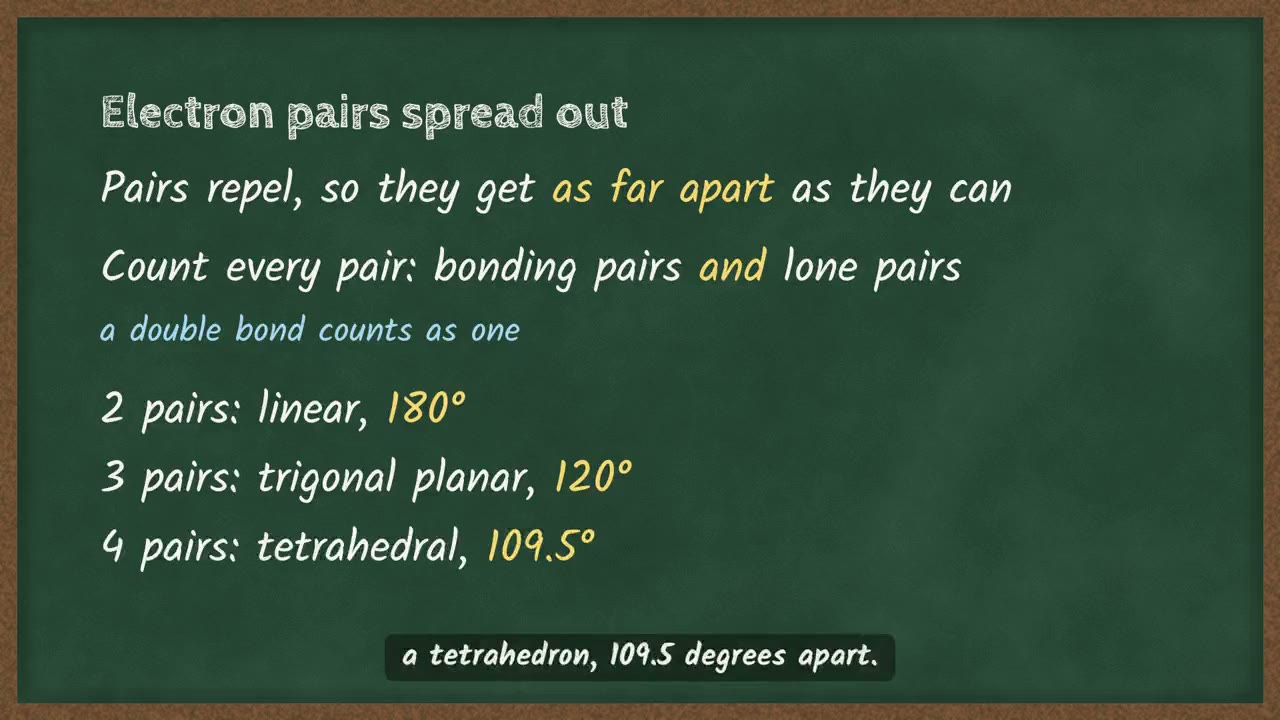 How lone pairs bend a molecule4 min
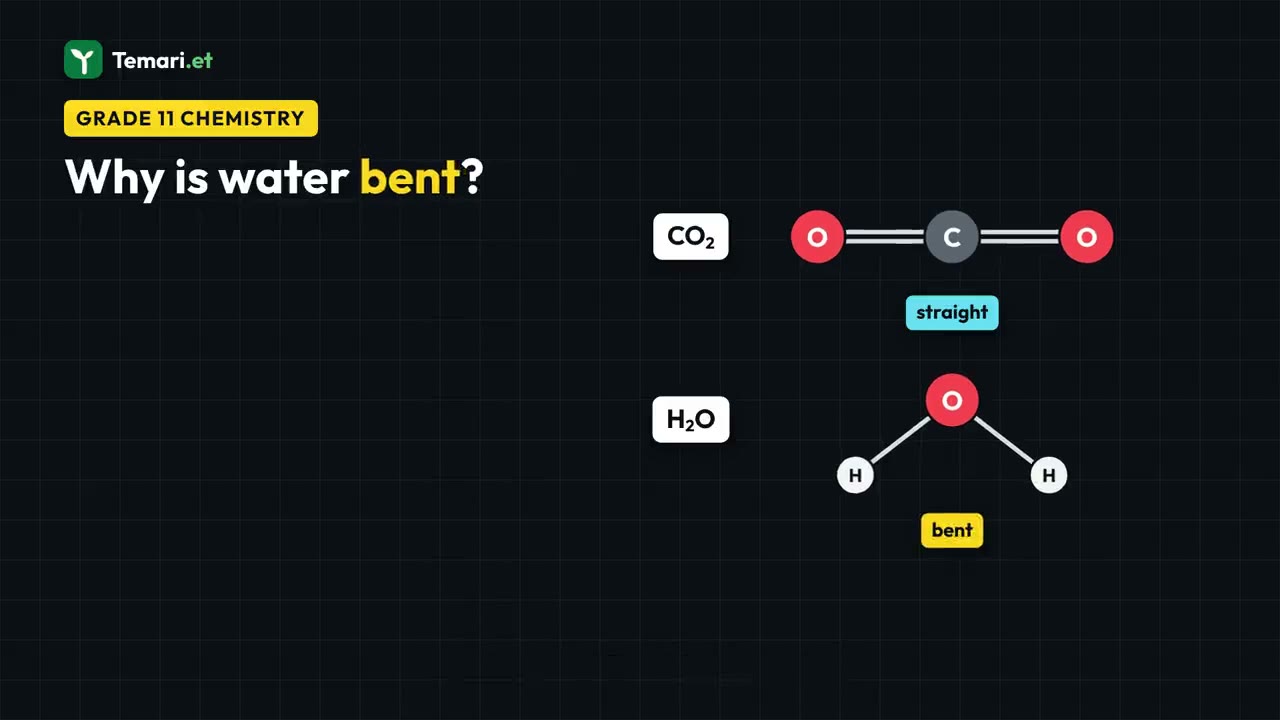
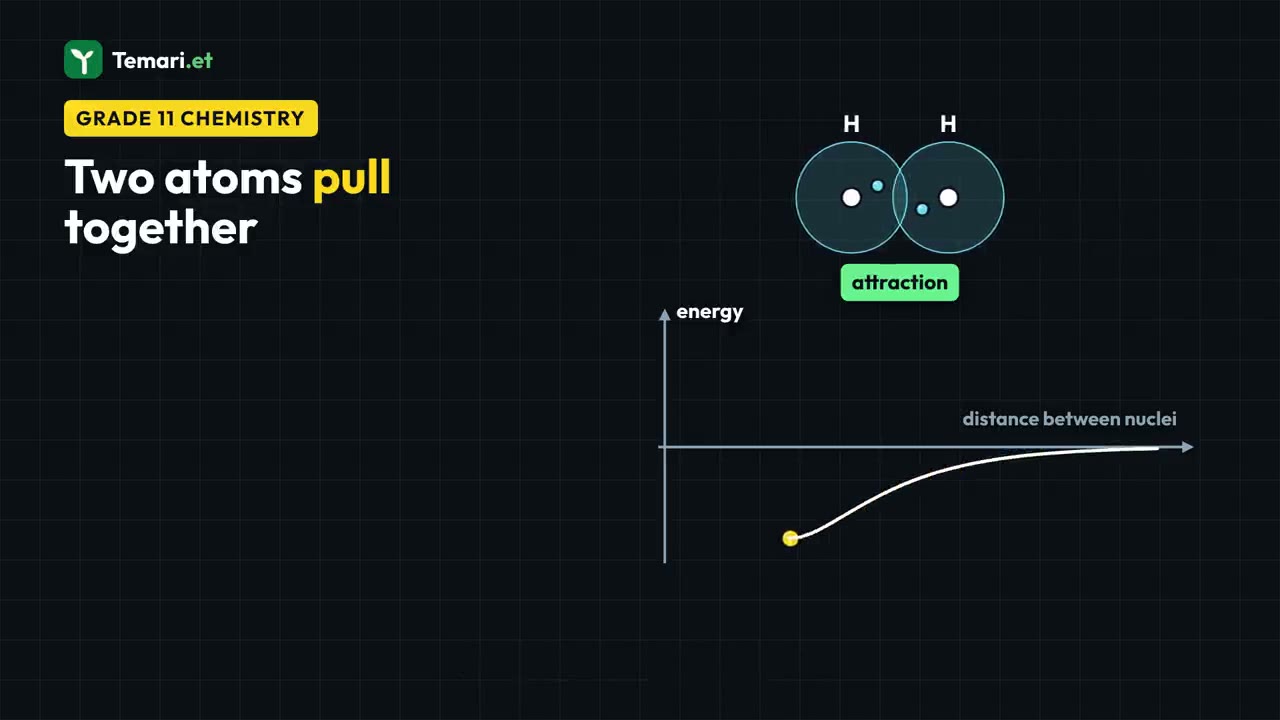
More on unit 2
The chapter's own page holds the rest of what Temari has on it, such as short notes and practice questions with their answers.
Open the unit 2 pagePractise this unit in the app
Temari turns this chapter into timed practice and marks it as you go, with an AI tutor to explain anything that did not land.
Start free
Temari.et is also an Android app, free on Google Play.

