Grade 10 Citizenship unit 5
Who holds the powers a constitution leaves unlisted
1:06 · Explainer 2 of 2 on unit 5
A short animated Temari explainer on Grade 10 Citizenship unit 5: Who holds the powers a constitution leaves unlisted. Free to watch, no account needed.
Everything the explainer says
The explainer's words, part by part, as its captions show them.
Listed powers and the remainder
A federal constitution can divide power in two ways.
It lists the powers one level shall have, and leaves the remainder to the other level.
That remainder is known as residuary power.
America: the rest goes to the states
America lists what the federal government shall have, and leaves the remainder to the states.
So the federal government in America is weak in relation to the states.
Canada: the rest goes to the centre
Canada does the opposite.
It lists the powers of the federating units, and leaves the remainder to the federal authority.
So in Canada, the federal government is more powerful.
Ethiopia lists both
Ethiopia's constitution lists federal powers in Article 51, and state powers in Article 52.
The federal list is much longer and broader than the state list.
And the residual power is left to the states.
Residuary power
So the list decides who holds the remainder, and that can shift power between the levels.
Save this one for revision.
The full lesson on unit 5
Temari's longer video lesson on this chapter, with every word written out on its page.
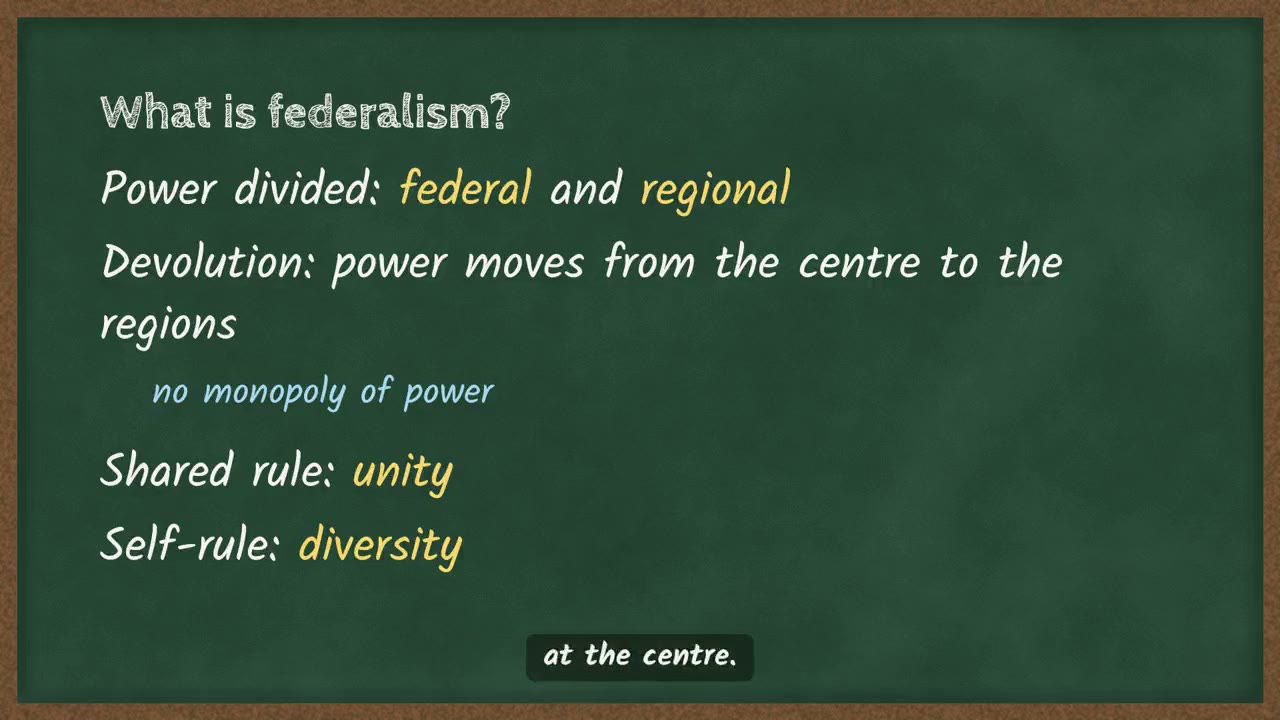 Federalism: who holds which power?4 min
More explainers on unit 5
More on unit 5
The chapter's own page holds the rest of what Temari has on it, such as short notes and practice questions with their answers.
Open the unit 5 pagePractise this unit in the app
Temari turns this chapter into timed practice and marks it as you go, with an AI tutor to explain anything that did not land.
Start free
Temari.et is also an Android app, free on Google Play.

