Grade 10 English unit 9
Does and did take the ending off the verb
1:26
A short animated Temari explainer on Grade 10 English unit 9: Does and did take the ending off the verb. Every word it says is written out under the video.
Everything the explainer says
The explainer's words, part by part, as its captions show them.
A singular subject: the verb takes s
In the simple present, a singular subject gives the verb an s: she washes her hair twice a week.
With a plural subject, or with I, there is no s: the janitors clean the office every morning.
A question: does takes the s
To make a question, bring in the verb do.
Do takes the s and becomes does, so wash is left plain, with no s: does she wash her hair twice a week?
The negative works the same way: she does not wash her hair twice a week.
Did takes the ed
The past simple works the same way, with did. My wife visited her hometown last year.
Did takes the past, so visit is left plain: did my wife visit her hometown last year?
My wife did not visit her hometown last year.
Now you try one
Now you try. His sister does not helps her mother with housework. Which is right: does not helps, or does not help?
Does already has the s, so help stays plain: his sister does not help her mother with housework.
Present and past simple
After does or did, the verb stays plain: does she wash, did my wife visit.
Save this one for revision.
The full lesson on unit 9
Temari's longer video lesson on this chapter, with every word written out on its page.
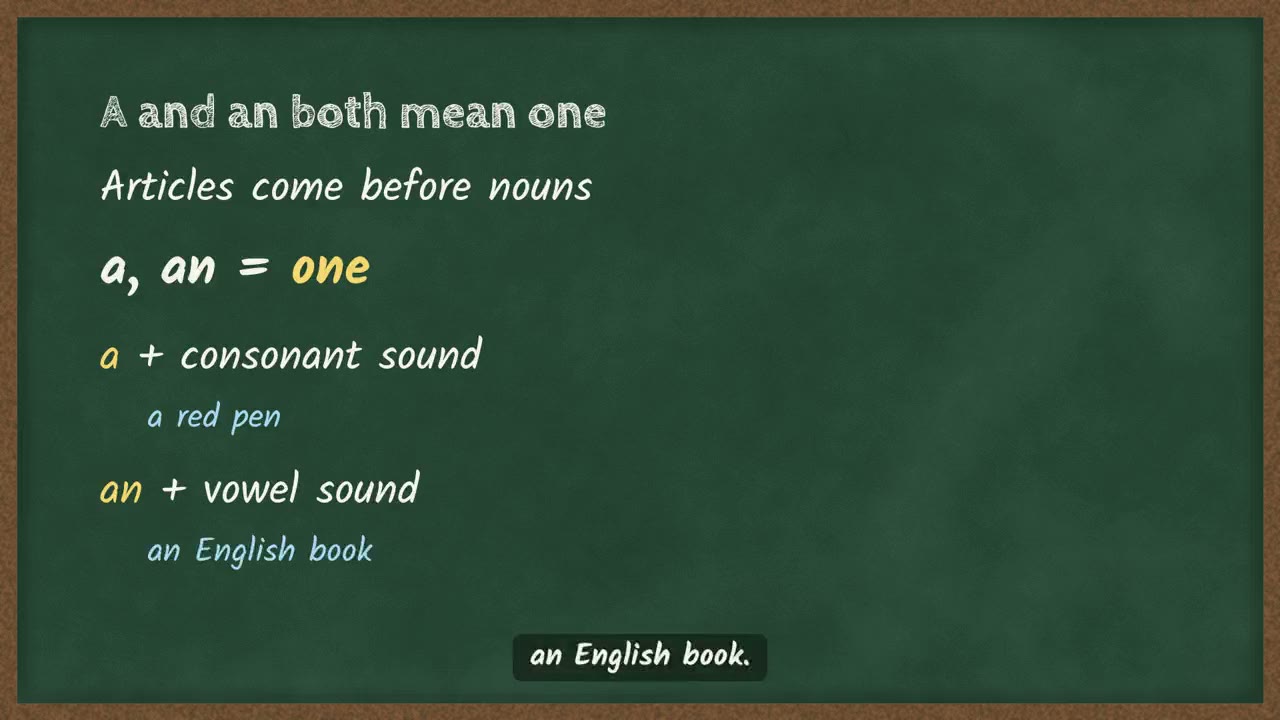 A or an? Listen to the first sound4 min
More on unit 9
The chapter's own page holds the rest of what Temari has on it, such as short notes and practice questions with their answers.
Open the unit 9 pagePractise this unit in the app
Temari turns this chapter into timed practice and marks it as you go, with an AI tutor to explain anything that did not land.
Start free
Temari.et is also an Android app, free on Google Play.

