Grade 10 Geography unit 2
How the sun moves Africa's rain belt
1:15 · Explainer 1 of 2 on unit 2
A short animated Temari explainer on Grade 10 Geography unit 2: How the sun moves Africa's rain belt. Every word it says is written out under the video.
Everything the explainer says
The explainer's words, part by part, as its captions show them.
Two winds meet at the ITCZ
Two belts of high pressure lie near 30 degrees north and south.
From them, trade winds blow towards the Equator: the dry Harmattan from the north, and the moist Monsoon from the south.
They meet in the Intertropical Convergence Zone, the ITCZ for short.
The ITCZ follows the sun
The ITCZ follows the overhead sun between the two tropics.
In June it sits at about 13 degrees north, along the Sahara's southern edge.
In December it swings south, along the West African coast, round the Congo Basin and on to Madagascar, far to the southeast.
Two passes, two rainy peaks
Where the ITCZ goes, the rain goes with it.
Near the Equator it passes over on its way south, and again on its way north, so the rain comes in two peaks a year.
Further out, it brings up to six months of rain in the high-sun season, and the rest of the year is dry.
The Sahara and the Kalahari stay under dry air all year.
The ITCZ and the rain
The trade winds meet at the ITCZ, and the rain moves with it as it follows the sun.
Save this one for revision.
The full lesson on unit 2
Temari's longer video lesson on this chapter, with every word written out on its page.
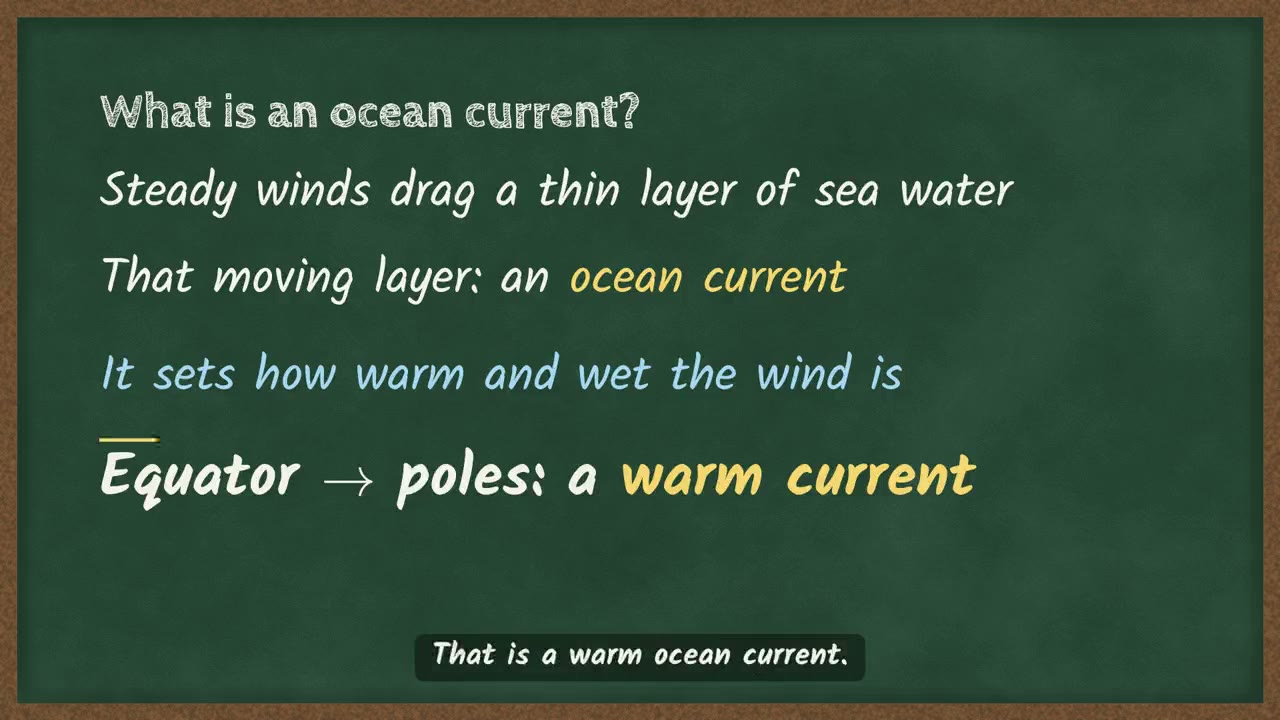 Warm and cool ocean currents of Africa4 min
More explainers on unit 2
More on unit 2
The chapter's own page holds the rest of what Temari has on it, such as short notes and practice questions with their answers.
Open the unit 2 pagePractise this unit in the app
Temari turns this chapter into timed practice and marks it as you go, with an AI tutor to explain anything that did not land.
Start free
Temari.et is also an Android app, free on Google Play.

