Grade 11 Biology unit 5
How one cell with 46 chromosomes becomes four sperm
1:21 · Explainer 1 of 2 on unit 5
A short animated Temari explainer on Grade 11 Biology unit 5: How one cell with 46 chromosomes becomes four sperm. Free to watch, no account needed.
Everything the explainer says
The explainer's words, part by part, as its captions show them.
Meiosis makes haploid gametes
Gametogenesis is how gametes, the egg and sperm cells, are formed.
Through meiosis, a diploid mother cell, 2n, forms haploid daughter cells, n.
In males it is called spermatogenesis, and it starts at puberty in the testis.
Mitosis makes many spermatogonia
Inside the seminiferous tubules of the testis, germ cells divide again and again by mitosis.
They make a large number of sperm mother cells, called spermatogonia.
Each is diploid, with 46 chromosomes.
Meiosis halves the number to 23
A spermatogonium divides by mitosis to give a primary spermatocyte.
This cell undergoes meiosis. Its first division makes two haploid secondary spermatocytes.
Each has 23 chromosomes, half of 46.
One cell gives four sperm
The second meiotic division gives four equal, haploid spermatids.
By spermiogenesis, each spermatid turns into a sperm.
The sperm then mature in the epididymis.
Spermatogenesis
So one primary spermatocyte with 46 chromosomes gives four haploid sperm.
Save this one for revision.
The full lesson on unit 5
Temari's longer video lesson on this chapter, with every word written out on its page.
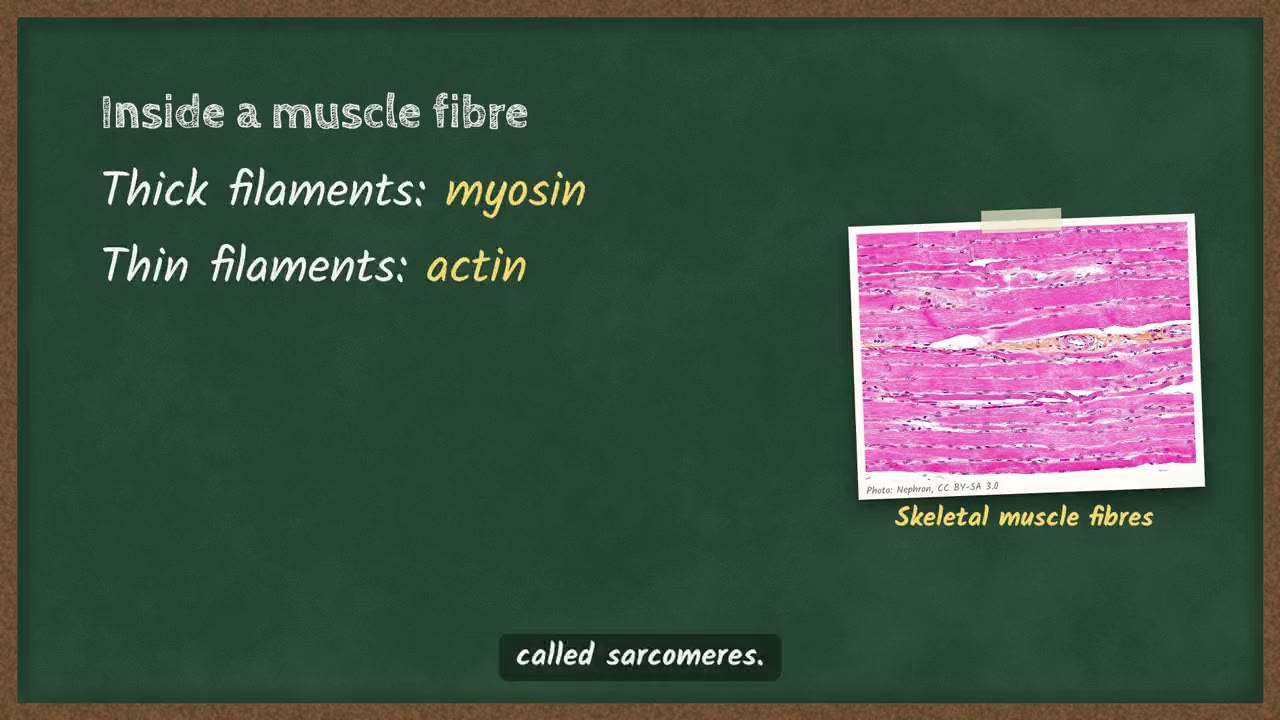 How a muscle contracts: calcium, actin, myosin and ATP4 min
More explainers on unit 5
More on unit 5
The chapter's own page holds the rest of what Temari has on it, such as short notes and practice questions with their answers.
Open the unit 5 pagePractise this unit in the app
Temari turns this chapter into timed practice and marks it as you go, with an AI tutor to explain anything that did not land.
Start free
Temari.et is also an Android app, free on Google Play.

