Grade 11 Mathematics unit 8
Counting the outcomes of one die and of two
1:24 · Explainer 2 of 2 on unit 8
A short animated Temari explainer on Grade 11 Mathematics unit 8: Counting the outcomes of one die and of two. Free to watch, no account needed.
Everything the explainer says
The explainer's words, part by part, as its captions show them.
Count the outcomes, then divide
Roll a fair die once. The sample space is every outcome: one, two, three, four, five, six.
An event is a set of outcomes, like four or more: four, five and six.
That is three out of six, so P(E) = 3/6 = 0.5.
Two dice make thirty six outcomes
Now roll two dice. Each face of the first meets each face of the second.
6 × 6 = 36 outcomes, one in each square.
A sum of eight fills five of them, from two and six to six and two.
So a sum of eight has probability 5/36.
Events with no overlap just add
Your textbook asks for a sum of eight, nine or ten.
Nine fills four squares, and ten fills three.
No square holds two sums, so these events are mutually exclusive, and their counts add.
5 + 4 + 3 = 12, and 12/36 is one third.
Counting outcomes
Count the sample space, count the event, then divide.
Save this one for revision.
The full lesson on unit 8
Temari's longer video lesson on this chapter, with every word written out on its page.
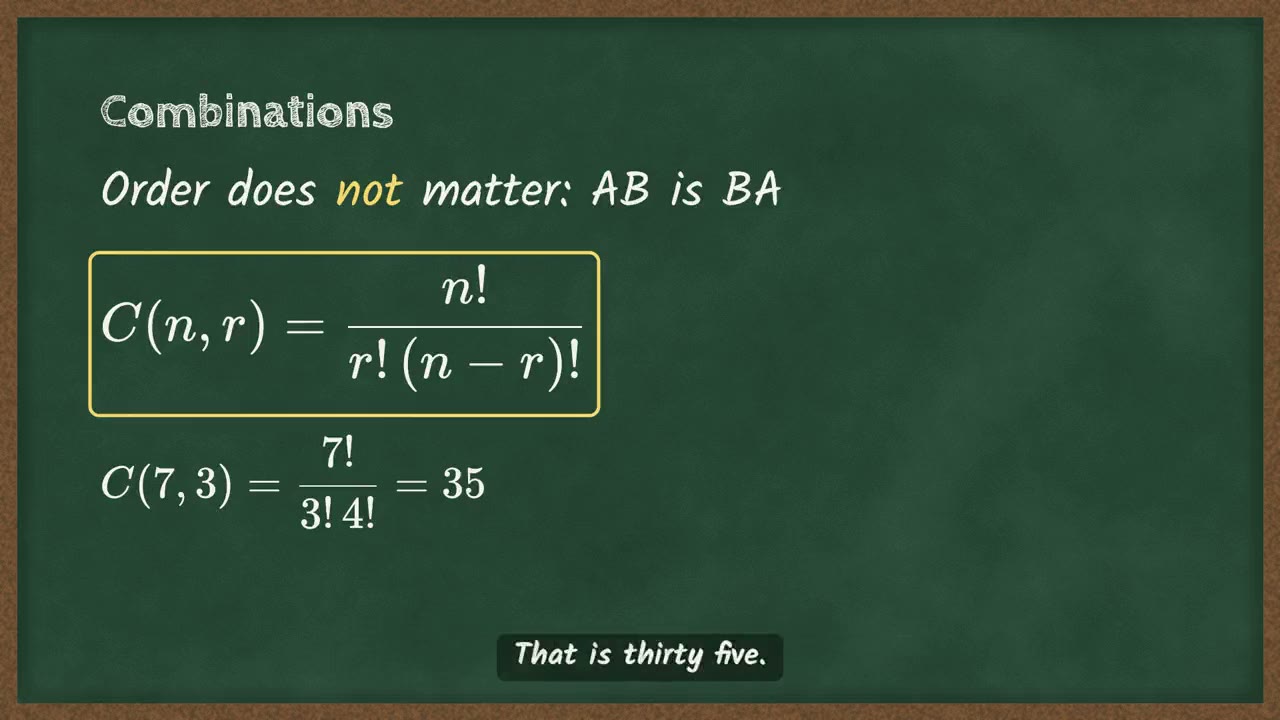 Probability by counting: combinations and at least one4 min
More explainers on unit 8
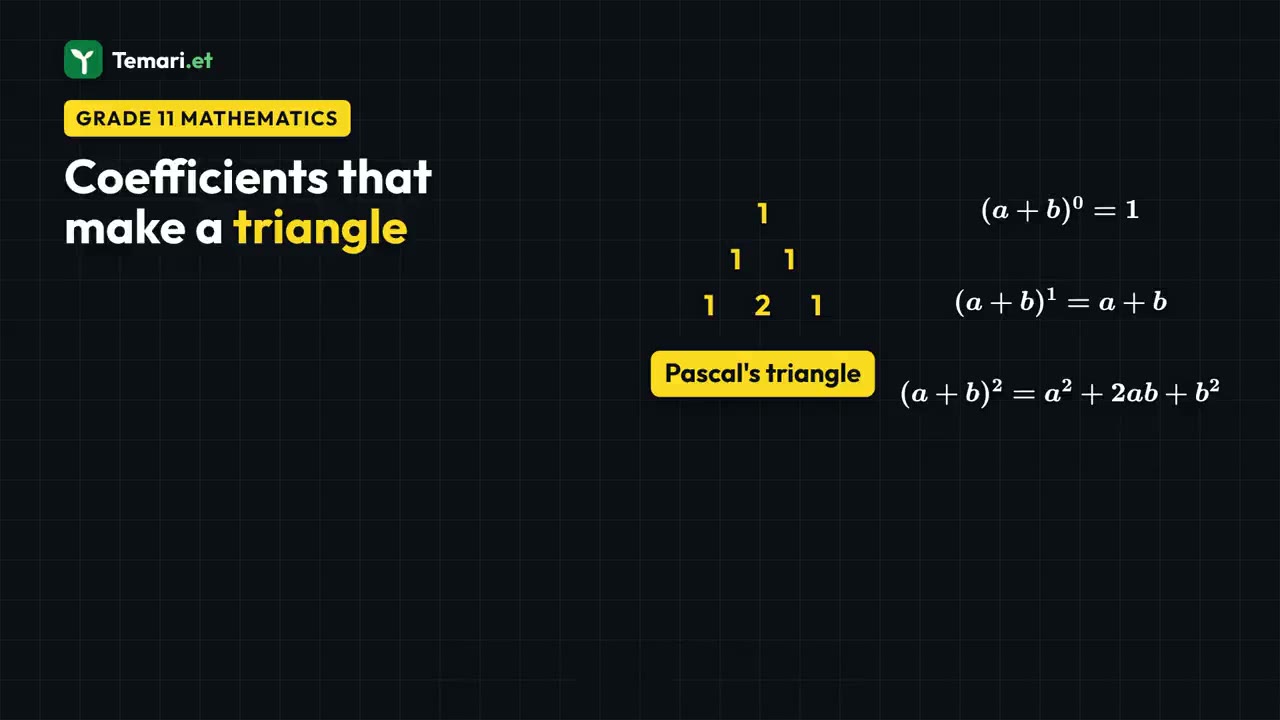
More on unit 8
The chapter's own page holds the rest of what Temari has on it, such as short notes and practice questions with their answers.
Open the unit 8 pagePractise this unit in the app
Temari turns this chapter into timed practice and marks it as you go, with an AI tutor to explain anything that did not land.
Start free
Temari.et is also an Android app, free on Google Play.

