Grade 12 Biology unit 5
How a signal crosses a synapse
1:26 · Explainer 2 of 2 on unit 5
A short animated Temari explainer on Grade 12 Biology unit 5: How a signal crosses a synapse. Every word it says is written out under the video.
Everything the explainer says
The explainer's words, part by part, as its captions show them.
Two neurons never touch
Where one neuron ends and the next begins, there is a gap called a synapse.
The axon ends in a swelling, the synaptic knob. It comes close to the next neuron but does not touch it.
The narrow space between them is the synaptic cleft.
The impulse lets calcium in
An impulse travels along the axon to the knob.
Inside are sacs called synaptic vesicles, which hold a neurotransmitter.
When the impulse arrives, calcium channels open, and calcium ions flow in.
The vesicles empty out
The calcium makes the vesicles fuse with the membrane of the knob.
They release the neurotransmitter by exocytosis, and it diffuses into the cleft.
A new impulse can start
It crosses the cleft and binds to receptors on the next neuron.
An excitatory transmitter starts a new impulse there. An inhibitory one prevents it.
Then the neurotransmitter is removed from the cleft.
Always one way
Synaptic transmission goes one way only.
Only axons end in synaptic knobs full of vesicles. Dendrites do not have them.
Synaptic transmission
Calcium lets the neurotransmitter out, and it carries the signal across the cleft.
Save this one for your exam.
The full lesson on unit 5
Temari's longer video lesson on this chapter, with every word written out on its page.
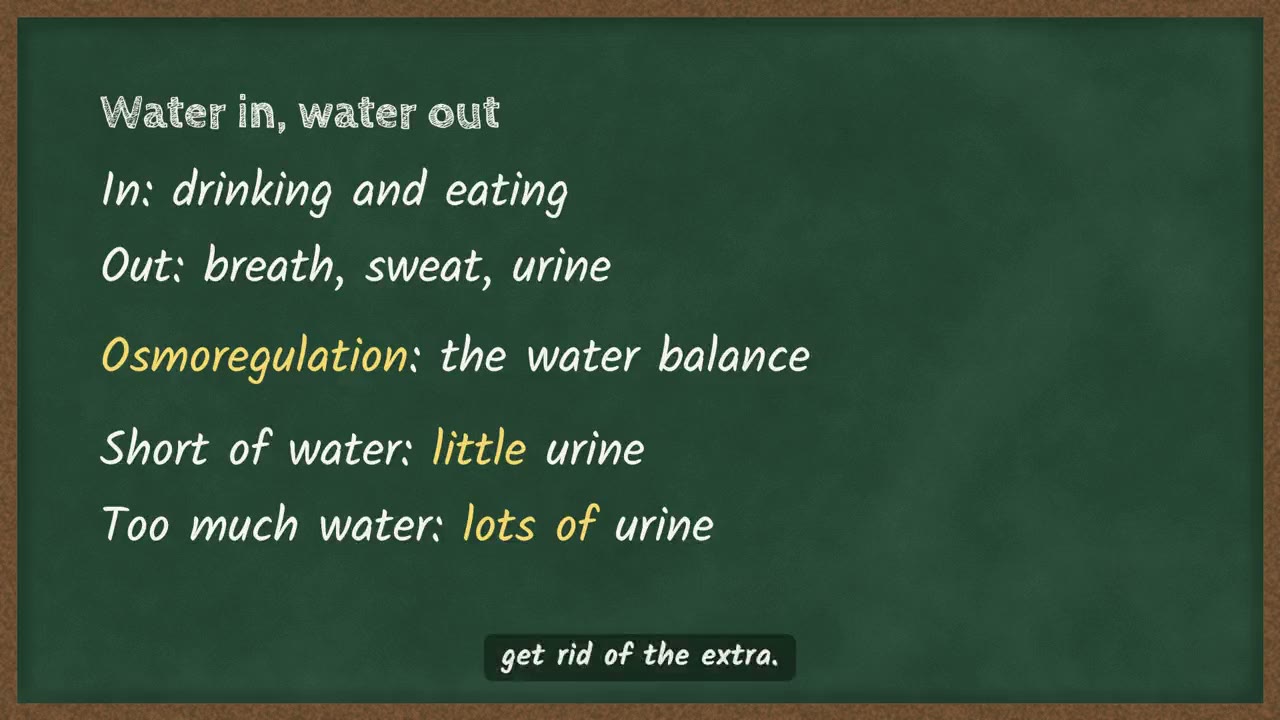 How ADH keeps your water balance4 min
More explainers on unit 5
More on unit 5
The chapter's own page holds the rest of what Temari has on it, such as short notes and practice questions with their answers.
Open the unit 5 pagePractise this unit in the app
Temari turns this chapter into timed practice and marks it as you go, with an AI tutor to explain anything that did not land.
Start free
Temari.et is also an Android app, free on Google Play.

