Grade 12 English unit 10
Can it stand alone? Fragments and joining words
4 min · 2 past exam questions worked through
Parts of the lesson
Tap a part to play the lesson from there.
A 4-minute Temari video lesson on Grade 12 English unit 10: Can it stand alone? Fragments and joining words. Free to watch, no account needed.
More on unit 10
The chapter's own page holds the rest of what Temari has on it, such as short notes and practice questions with their answers.
Open the unit 10 pageEverything the lesson says
The lesson's words, part by part. Tap a time to play the lesson from there.
0:00Introduction
A sentence must be able to stand on its own. Many students write half sentences, called fragments, without noticing. Small joining words like because, when and whether are often the cause. Let's learn to spot a fragment, and to choose the right joining word.
0:19What makes a sentence complete
A complete sentence needs a subject, a verb, and a finished thought. Her classmates often groaned. Classmates is the subject. Groaned is the verb. And the thought is finished.
Now look at this one. Because she didn't want to seem different. It has a subject and a verb. But the thought is not finished. Because what? The reader is left waiting. This is a fragment.
0:49Fixing a fragment
Words like because, when, if, though and unless make a clause lean on another one. So fix the fragment by joining it to a main clause. She would join them in the protests, because she didn't want to seem different.
Some fragments have no main verb at all. About the time my dog made a mess in our kitchen. That is only the topic of a story. Join it to a sentence: she wrote a funny story about the time my dog made a mess.
1:20Practice question 1Past exam
Here is a practice question. Which of these is a complete sentence? Read all four options. Pause the video, and try it.
Look for a subject, a verb and a finished thought. C has all three: classmates, groaned, and nothing missing. The answer is C. A says, in school, when teachers assigned a composition, and then it stops. When what happened? B begins with because, and never says what follows. And D, about the time my dog made a mess, has no main subject or verb of its own.
2:04Pick the joining word by meaning
Joining words also carry meaning, so pick the one that fits. If gives a condition. Unless means if not. You won't pass the test unless you study. Though shows a contrast. I could not get a seat, though I came early.
And whether, with or, means it does not matter which. Whether I'm feeling happy or sad, I try to keep a positive attitude. Happy or sad, the result is the same.
2:34Practice question 2Past exam
Try this one. We are leaving on Wednesday, blank, or not it rains. Pause the video, and try it.
Look at the words after the gap: or not. Rain or no rain, we still leave. It does not matter which. That meaning, with or, needs whether. We are leaving on Wednesday whether or not it rains. The answer is B. If does not pair with or not in this sentence. Though would show a contrast, and takes no or not. And when names a time.
3:14Summary
So remember. A sentence needs a subject, a verb and a finished thought. A clause that starts with because, when or if leans on a main clause. On its own, it is a fragment, so join it to a main clause. And pick the joining word by its meaning: unless means if not, though shows a contrast, and whether or not means it does not matter which. Keep practising questions like these on Temari.et.
Practise this unit in the app
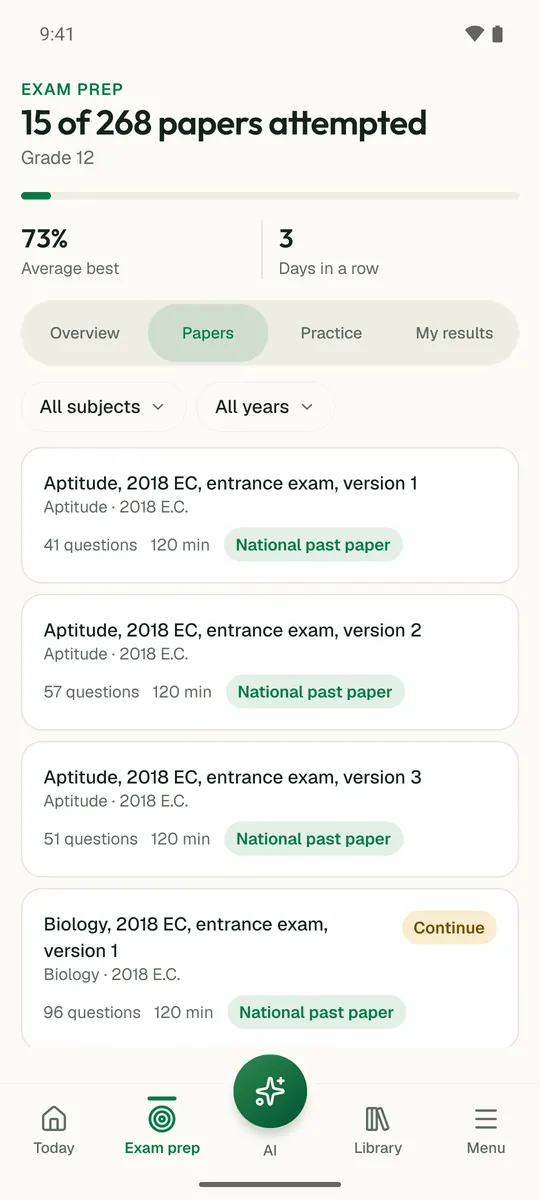
Temari turns this chapter into timed practice and marks it as you go, with an AI tutor to explain anything that did not land.
Start free
Temari.et is also an Android app, free on Google Play.