Grade 12 History unit 1
How the Industrial Revolution led to imperialism
1:19 · Explainer 1 of 2 on unit 1
A short animated Temari explainer on Grade 12 History unit 1: How the Industrial Revolution led to imperialism. Free to watch, no account needed.
Everything the explainer says
The explainer's words, part by part, as its captions show them.
Factories made too much
The Industrial Revolution brought cheap mass production.
Now the big problem was too many goods.
Many people were poor, so they could not buy all that the factories made.
This is called overproduction.
Industry looks abroad
So the industrial West looked to the rest of the world.
They wanted raw materials to feed their factories, and markets to sell their goods.
Steam and wire tie the world
Steamships, railways and the electric telegraph tied the world closer than ever.
Soon, it became one capitalist world economy.
The power gap grows
From about 1850, industry and science went into armies and navies.
The power gap between western and non-western states grew bigger than ever.
Now the West could settle conflicts by force.
The result: imperialism
Together, these changes led to the imperialism of the late 19th century: a fast, growing drive for colonies and spheres of influence.
The Age of Imperialism began around 1885 or 1890.
From factories to empire
Too many goods, a need for raw materials and markets, and a bigger power gap led to imperialism.
Save this one for your exam.
The full lesson on unit 1
Temari's longer video lesson on this chapter, with every word written out on its page.
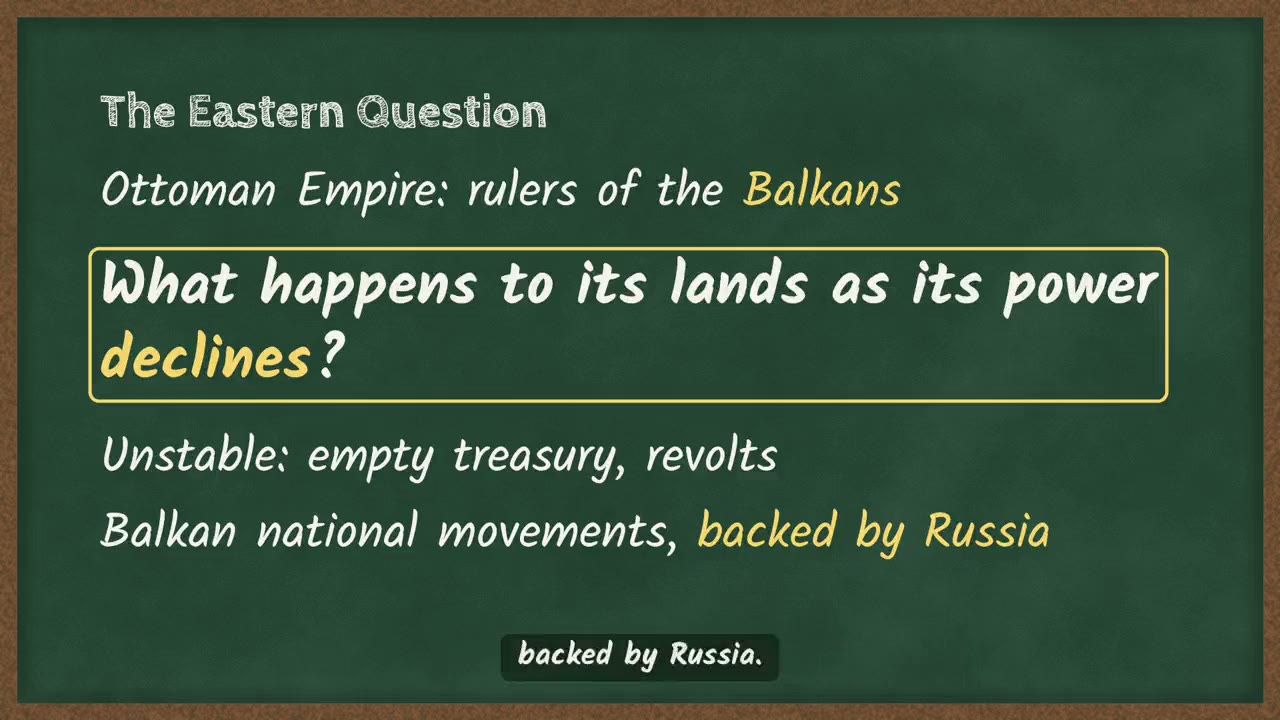 The Eastern Question: who gains as the Ottomans decline4 min
More explainers on unit 1
More on unit 1
The chapter's own page holds the rest of what Temari has on it, such as short notes and practice questions with their answers.
Open the unit 1 pagePractise this unit in the app
Temari turns this chapter into timed practice and marks it as you go, with an AI tutor to explain anything that did not land.
Start free
Temari.et is also an Android app, free on Google Play.