Grade 12 Physics unit 2
Why the planets never fall into the Sun
1:16 · Explainer 3 of 3 on unit 2
A short animated Temari explainer on Grade 12 Physics unit 2: Why the planets never fall into the Sun. Every word it says is written out under the video.
Everything the explainer says
The explainer's words, part by part, as its captions show them.
Why doesn't the Earth fall into the Sun?
The Sun pulls every planet toward it with a strong force of gravity.
So why doesn't the Earth fall into the Sun?
No pull means a straight line
First, imagine the Sun's pull switched off.
The Earth would carry on in a straight line, in the direction it was moving.
The pull bends the path
Now switch the pull back on.
In each moment, the Earth moves forward a little, and falls a little toward the Sun.
Step after step, its straight path bends into a curve around the Sun.
Fast enough to stay in orbit
Its speed is high enough that it keeps falling toward the Sun without ever leaving its orbit.
A pull toward the centre of a circle like this is called a centripetal force.
The pull it needs: F = mv²/r
Its size is F = mv²/r, and for the planets, the Sun's gravity supplies it.
Twice the speed needs four times the pull.
Earth's gravity holds the Moon in its orbit in the same way.
Orbits and centripetal force
Gravity pulls a planet toward the Sun, and its speed carries it on, so it keeps falling around the Sun.
Save this one for your exam.
The full lesson on unit 2
Temari's longer video lesson on this chapter, with every word written out on its page.
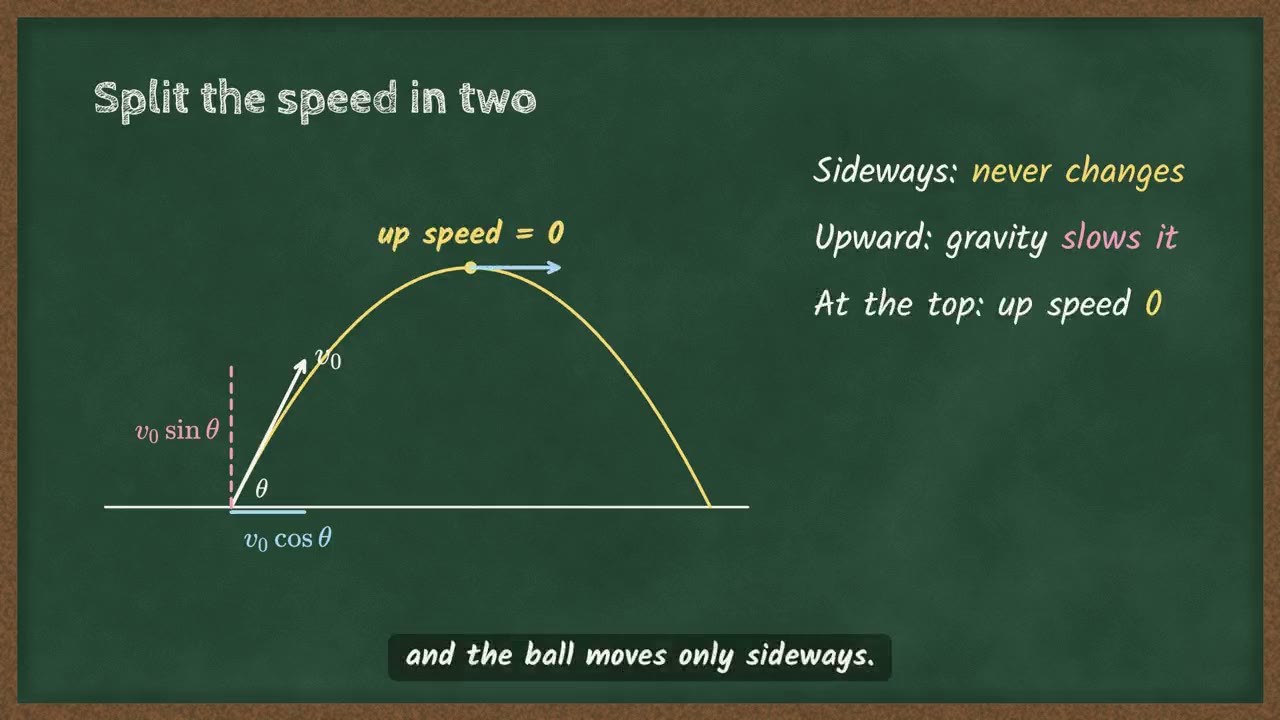 Projectile motion: two motions at once3 min
More explainers on unit 2
More on unit 2
The chapter's own page holds the rest of what Temari has on it, such as short notes and practice questions with their answers.
Open the unit 2 pagePractise this unit in the app
Temari turns this chapter into timed practice and marks it as you go, with an AI tutor to explain anything that did not land.
Start free
Temari.et is also an Android app, free on Google Play.

