Grade 9 Biology unit 6
Evergreen or deciduous: how forest trees face winter
1:24 · Explainer 3 of 3 on unit 6
A short animated Temari explainer on Grade 9 Biology unit 6: Evergreen or deciduous: how forest trees face winter. Free to watch, no account needed.
Everything the explainer says
The explainer's words, part by part, as its captions show them.
Two trees face winter
In the temperate broad-leaf forest, deciduous trees drop their leaves before winter.
In the boreal forest, evergreen conifers keep their needle-shaped leaves year-round.
Why the leaves drop
Leaves carry out photosynthesis, and roots take up water.
But temperate winters average 0°C.
Low temperatures would reduce photosynthesis, and make water uptake from frozen soil difficult.
So the leaves drop before winter.
And the animals?
Many mammals there hibernate in winter, while many bird species migrate to warmer climates.
The boreal forest
Boreal winters are long and cold, and the precipitation usually falls as snow.
So its trees are mostly cold-tolerant conifers, like pines and spruce.
Keeping their needles year-round helps them grow faster there than deciduous trees.
What the exam asked
A national exam asked: what are the common plants of the boreal forest?
Cone-bearing conifers, so the answer is B.
Deciduous trees belong to the temperate broad-leaf forest.
Forest trees in winter
So conifers keep needles, and deciduous trees drop leaves.
Save this one for revision.
The full lesson on unit 6
Temari's longer video lesson on this chapter, with every word written out on its page.
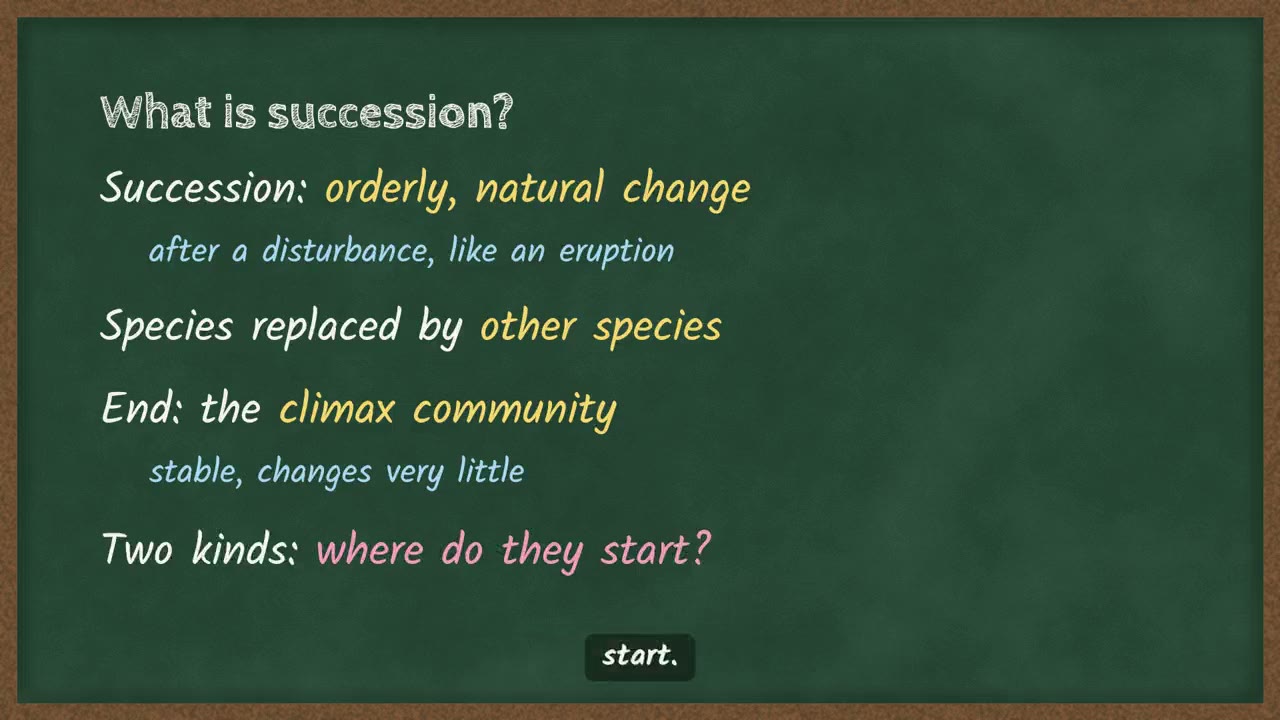 Ecological succession: how life comes back4 min

More on unit 6
The chapter's own page holds the rest of what Temari has on it, such as short notes and practice questions with their answers.
Open the unit 6 pagePractise this unit in the app
Temari turns this chapter into timed practice and marks it as you go, with an AI tutor to explain anything that did not land.
Start free
Temari.et is also an Android app, free on Google Play.

