Grade 10 Chemistry unit 5
How salt water is split to make chlorine
1:11 · Explainer 2 of 2 on unit 5
A short animated Temari explainer on Grade 10 Chemistry unit 5: How salt water is split to make chlorine. Every word it says is written out under the video.
Everything the explainer says
The explainer's words, part by part, as its captions show them.
Chlorine is locked in salt
In nature, chlorine is only found in compounds, mostly sodium chloride, from seawater and rock salt.
To get it out, concentrated salt water is split by electricity.
At the anode, chloride loses electrons
At the positive anode, chloride ions give up electrons, and pair up as chlorine, a greenish-yellow gas.
Losing electrons is oxidation.
At the cathode, water gains electrons
The electrons flow round to the negative cathode, where water takes them, giving hydrogen gas and hydroxide ions.
The sodium ions stay, so the solution becomes sodium hydroxide.
Three products, kept apart
So salt water gives chlorine, hydrogen and sodium hydroxide.
The chlorine must be kept away from the sodium hydroxide, because the two react.
Why tap water smells of chlorine
In water, chlorine forms hydrochloric acid and hypochlorous acid.
This chlorine water kills germs, which is why city tap water can smell of chlorine.
Chlorine from salt water
Chlorine comes from salt water, and kills germs.
Save this one for revision.
The full lesson on unit 5
Temari's longer video lesson on this chapter, with every word written out on its page.
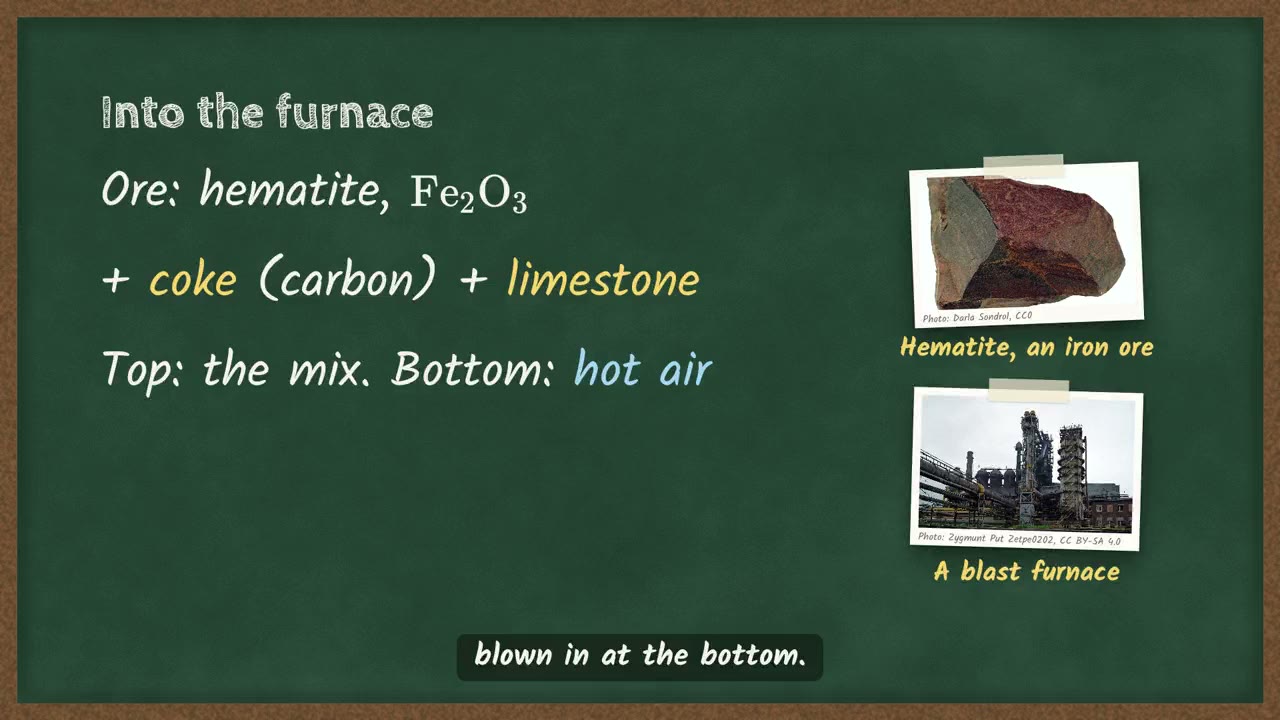 Iron from rock: the blast furnace4 min
More explainers on unit 5
More on unit 5
The chapter's own page holds the rest of what Temari has on it, such as short notes and practice questions with their answers.
Open the unit 5 pagePractise this unit in the app
Temari turns this chapter into timed practice and marks it as you go, with an AI tutor to explain anything that did not land.
Start free
Temari.et is also an Android app, free on Google Play.

