Grade 11 Chemistry unit 3
Why the thermometer stops twice as you heat ice
1:21 · Explainer 1 of 2 on unit 3
A short animated Temari explainer on Grade 11 Chemistry unit 3: Why the thermometer stops twice as you heat ice. Free to watch, no account needed.
Everything the explainer says
The explainer's words, part by part, as its captions show them.
Heat ice and its molecules shake faster
Heat a block of ice at a steady rate, and watch the thermometer.
Its molecules can only vibrate in place, but the heat makes them vibrate faster.
Temperature measures that motion, so it climbs.
At 0 °C the temperature stops
At 0 °C the climb stops, though the heat keeps pouring in.
The heat now breaks the attractions that hold the molecules in place. They shake no faster, but they break loose and slide past each other.
Melting one mole of ice takes 6.01 kJ.
A longer stop at 100 °C
Once the ice has all melted, the water warms again, and at one atmosphere it boils at 100 °C.
The climb stops again until every molecule has escaped into the gas.
Boiling takes far more heat than melting, because the molecules must be pulled right apart.
Only then does the steam get hotter.
Rise, fall or stay the same?
So during a phase change, what does the temperature do: rise, fall, or stay the same?
It stays the same, because all the heat goes into breaking attractions.
Heating curve of water
Every flat stretch on a heating curve is a phase change.
Save this one for revision.
The full lesson on unit 3
Temari's longer video lesson on this chapter, with every word written out on its page.
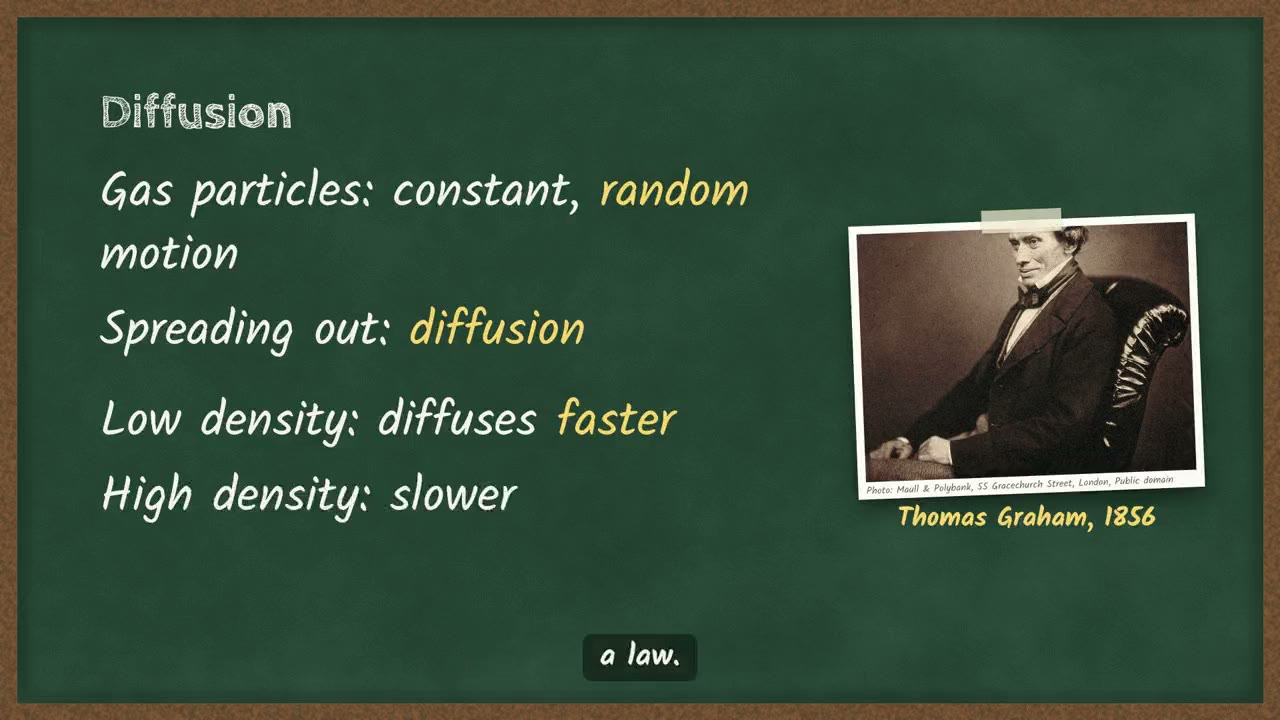 Graham's law: why light gases spread faster4 min
More explainers on unit 3
More on unit 3
The chapter's own page holds the rest of what Temari has on it, such as short notes and practice questions with their answers.
Open the unit 3 pagePractise this unit in the app
Temari turns this chapter into timed practice and marks it as you go, with an AI tutor to explain anything that did not land.
Start free
Temari.et is also an Android app, free on Google Play.

