Grade 11 English unit 5
Participle phrases: -ing, -ed or having
1:19
A short animated Temari explainer on Grade 11 English unit 5: Participle phrases: -ing, -ed or having. Every word it says is written out under the video.
Everything the explainer says
The explainer's words, part by part, as its captions show them.
A participle phrase describes a noun
A participle phrase works like an adjective: it describes a noun.
Feeling depressed, we went to bed early.
Feeling ends in -ing, so this is a present participle phrase.
It describes we, so it sits right next to we.
Past: -ed or -en
A past participle usually ends in -ed or -en.
Damaged by the rain, the canal was closed.
Damaged is a past participle, and the phrase describes the canal.
Perfect: having + past participle
The third type is having, plus the past participle.
Having finished the report, she took a nap.
This perfect participle phrase shows the first action was done before the second.
Now you try one
Now you try one. Having eaten their lunch, the kids went to the playground. Which type is the phrase?
Having, plus eaten: a perfect participle phrase. Lunch came first, then the playground.
Participle phrases
-ing for the present, -ed or -en for the past, and having for the perfect.
Save this one for revision.
The full lesson on unit 5
Temari's longer video lesson on this chapter, with every word written out on its page.
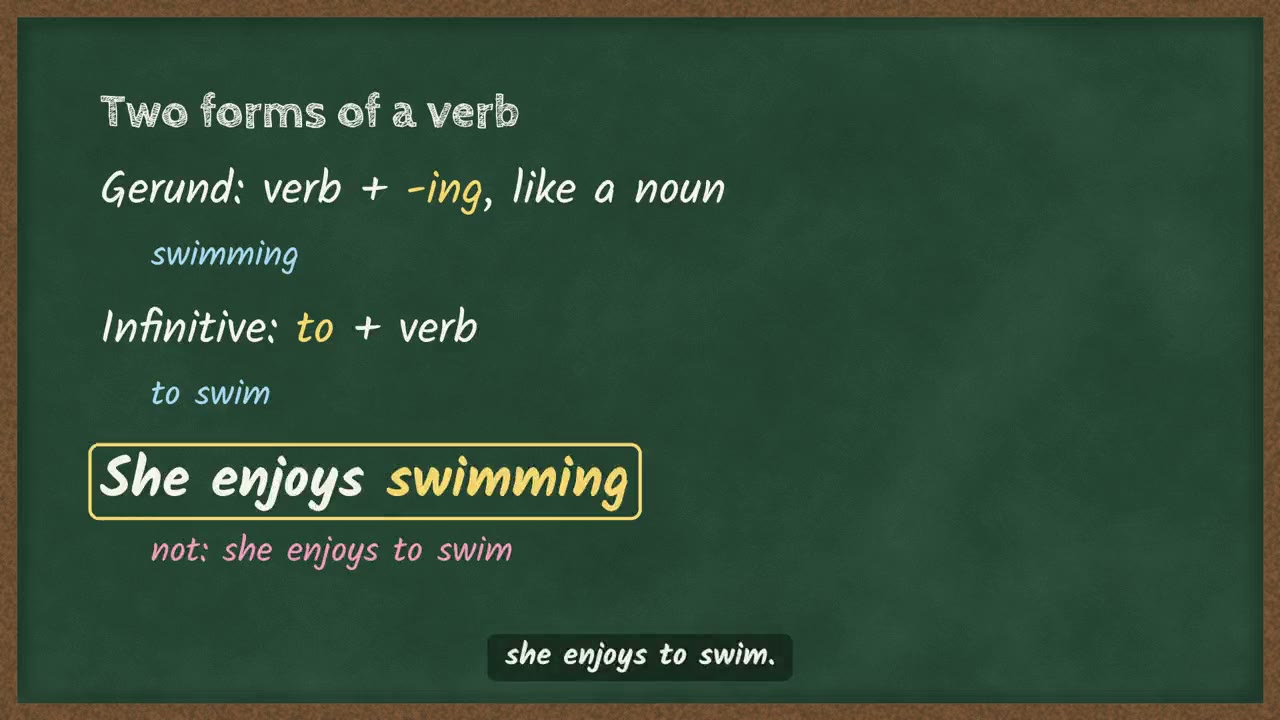 Gerund or infinitive: the first verb decides4 min
More on unit 5
The chapter's own page holds the rest of what Temari has on it, such as short notes and practice questions with their answers.
Open the unit 5 pagePractise this unit in the app
Temari turns this chapter into timed practice and marks it as you go, with an AI tutor to explain anything that did not land.
Start free
Temari.et is also an Android app, free on Google Play.

