Grade 11 Geography unit 6
How poverty and damaged land feed each other
1:21
A short animated Temari explainer on Grade 11 Geography unit 6: How poverty and damaged land feed each other. Every word it says is written out under the video.
Everything the explainer says
The explainer's words, part by part, as its captions show them.
Two problems in one loop
Poverty and environmental damage feed each other in a vicious cycle, called the poverty-environment nexus.
Poverty leads many poor people to overuse the resources they live on from day to day.
That damages the environment, and the damage makes their poverty deeper.
How the land wears out
On farmland, natural vegetation is cleared for farming, and animals are overgrazed.
Then torrential rain washes the bare soil away.
Overcropping exhausts what is left, and yields fall.
Lower yields leave the family poorer than before.
A spiral going down
The link is also drawn as a downward spiral.
As poverty rises, environmental damage rises with it, and the people and the land both grow worse off.
Breaking the cycle
To break it, land can be managed through its soil, its vegetation, its water, or all of them together.
That means preventing overgrazing, reducing forest loss, and stopping the over-extraction of water.
The aim is the best balance between protecting the environment and reducing poverty.
The poverty-environment nexus
Poverty wears out the land, and worn-out land deepens poverty.
Save this one for revision.
The full lesson on unit 6
Temari's longer video lesson on this chapter, with every word written out on its page.
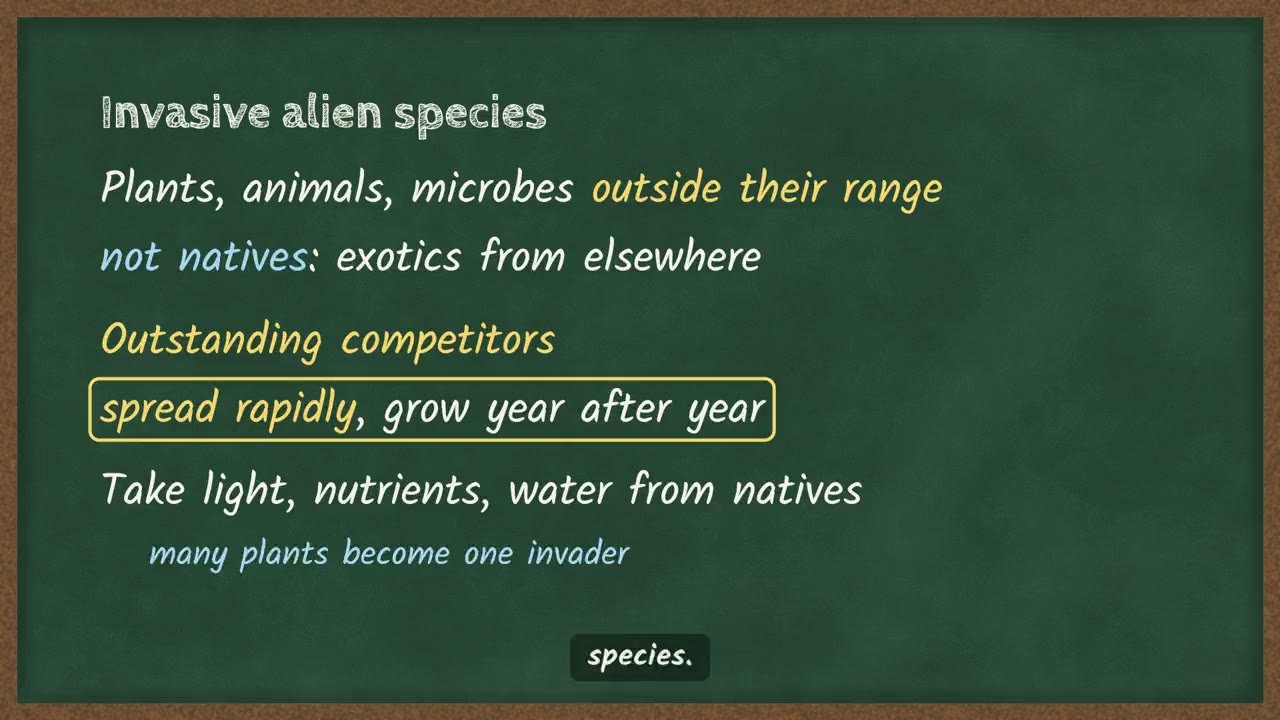 Invasive alien species: stop them early, or pay for years4 min
More on unit 6
The chapter's own page holds the rest of what Temari has on it, such as short notes and practice questions with their answers.
Open the unit 6 pagePractise this unit in the app
Temari turns this chapter into timed practice and marks it as you go, with an AI tutor to explain anything that did not land.
Start free
Temari.et is also an Android app, free on Google Play.

