Grade 12 Economics unit 4
How the reserve ratio decides what banks can lend
1:06 · Explainer 2 of 2 on unit 4
A short animated Temari explainer on Grade 12 Economics unit 4: How the reserve ratio decides what banks can lend. Free to watch, no account needed.
Everything the explainer says
The explainer's words, part by part, as its captions show them.
A bank must keep back part of every deposit
When people deposit money, a bank must keep a share of it in reserve.
That share is the required reserve ratio. The rest, the bank can lend.
At 15 percent, it keeps 15 birr of every 100
Say the ratio is 15 percent.
Of every 100 birr deposited, the bank keeps 15 birr, and can lend 85 birr.
A lower ratio leaves more to lend
The National Bank of Ethiopia once cut this ratio from 15 to 10 percent.
Now the bank keeps only 10 birr, and can lend 90 birr.
The aim was to get banks lending, particularly to exporters.
Lower it in a recession, raise it against inflation
So in a recession, the National Bank lowers the ratio, and banks can give more credit. That is expansionary policy.
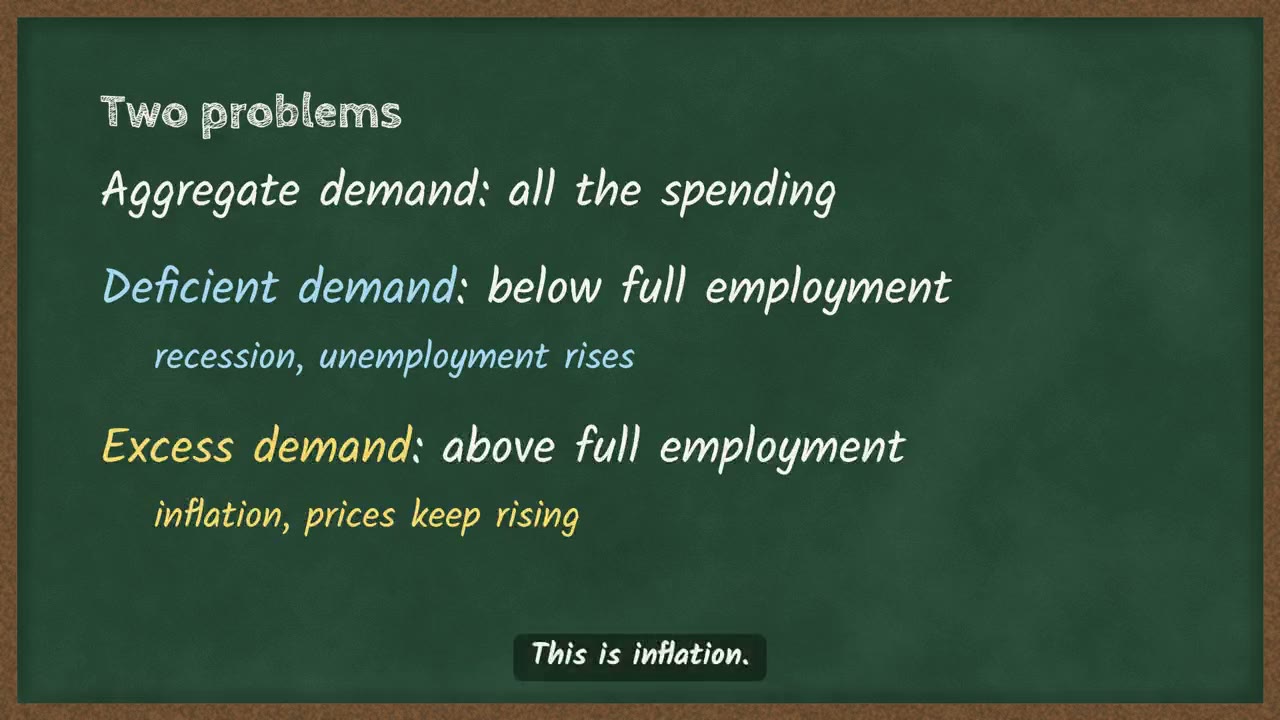
During inflation, it raises the ratio, and bank lending is cut back. That is tight policy.
Required reserve ratio
Lower the reserve ratio, and banks lend more. Raise it, and they lend less.
Save this one for your exam.
The full lesson on unit 4
Temari's longer video lesson on this chapter, with every word written out on its page.
 Push demand up, or pull it down4 min
More explainers on unit 4

More on unit 4
The chapter's own page holds the rest of what Temari has on it, such as short notes and practice questions with their answers.
Open the unit 4 pagePractise this unit in the app
Temari turns this chapter into timed practice and marks it as you go, with an AI tutor to explain anything that did not land.
Start free
Temari.et is also an Android app, free on Google Play.

