Grade 12 Biology unit 3
How cactus plants take in carbon dioxide at night
1:28 · Explainer 1 of 3 on unit 3
A short animated Temari explainer on Grade 12 Biology unit 3: How cactus plants take in carbon dioxide at night. Free to watch, no account needed.
Everything the explainer says
The explainer's words, part by part, as its captions show them.
Open pores lose water
Carbon dioxide enters a leaf through pores called stomata.
Water vapour leaves through the same pores.
On a hot, dry desert day, open stomata would make a cactus lose its water.
At night the stomata open
So CAM plants, like cacti, open their stomata at night.
Carbon dioxide enters, and an enzyme joins it to a molecule called PEP.
That makes oxaloacetate, which is turned into malate.
The malate is stored in the vacuole all night, so the leaf turns acidic.
By day the stomata close
When the sun rises, the stomata close, so no water escapes.
The malate leaves the vacuole and releases its carbon dioxide inside the leaf.
With the stomata shut, it cannot escape.
The Calvin cycle then fixes it into sugar, using energy from the light reactions.
Two steps, half a day apart
A CAM plant takes in carbon dioxide at night, and fixes it by day.
C4 plants keep these two steps in two different cells.
CAM plants keep them apart in time.
CAM plants
Stomata open at night, malate stored in the vacuole, and sugar made by day.
Save this one for your exam.
The full lesson on unit 3
Temari's longer video lesson on this chapter, with every word written out on its page.
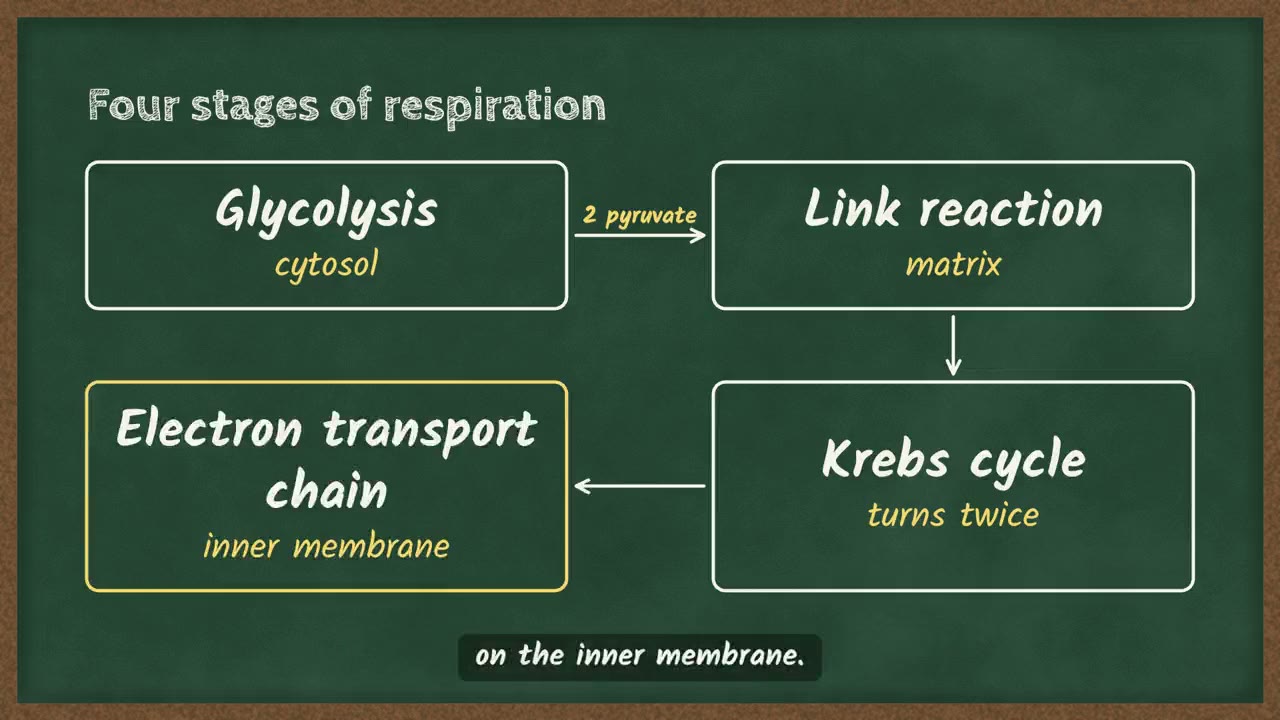 Counting the ATP from one glucose4 min
More explainers on unit 3
More on unit 3
The chapter's own page holds the rest of what Temari has on it, such as short notes and practice questions with their answers.
Open the unit 3 pagePractise this unit in the app
Temari turns this chapter into timed practice and marks it as you go, with an AI tutor to explain anything that did not land.
Start free
Temari.et is also an Android app, free on Google Play.

